
Understanding the barriers to applying international accounting standards is more urgent than most business owners realize. These standards were designed to create a common financial language across borders — yet in practice, the road to full adoption is rarely smooth. The gap between the theory and the reality of implementation is where companies lose time, money, and credibility.
At OMK, a certified public accounting office with deep expertise in financial compliance, we work closely with businesses navigating this exact challenge. Whether you are a growing enterprise or an established firm re-examining your reporting framework, the guidance of a qualified accounting office can make the difference between a painful transition and a seamless one.
What Are International Accounting Standards?
International accounting standards are a set of globally recognized principles that govern how financial transactions are recorded, reported, and disclosed. Developed initially by the International Accounting Standards Committee (IASC) and later maintained by the IASB, these standards aim to ensure that financial statements are comparable, transparent, and reliable regardless of where a company operates.
The logic behind them is straightforward: when investors, creditors, and regulators all read financial statements prepared under the same rules, trust in those numbers increases. What is interesting here is that even countries with strong local accounting traditions have gradually shifted toward adopting these standards — not because their own systems were broken, but because global capital markets demand consistency. A company that cannot produce internationally legible financial reports is a company that limits its own growth potential.
What Are the Most Notable International Accounting Standards?
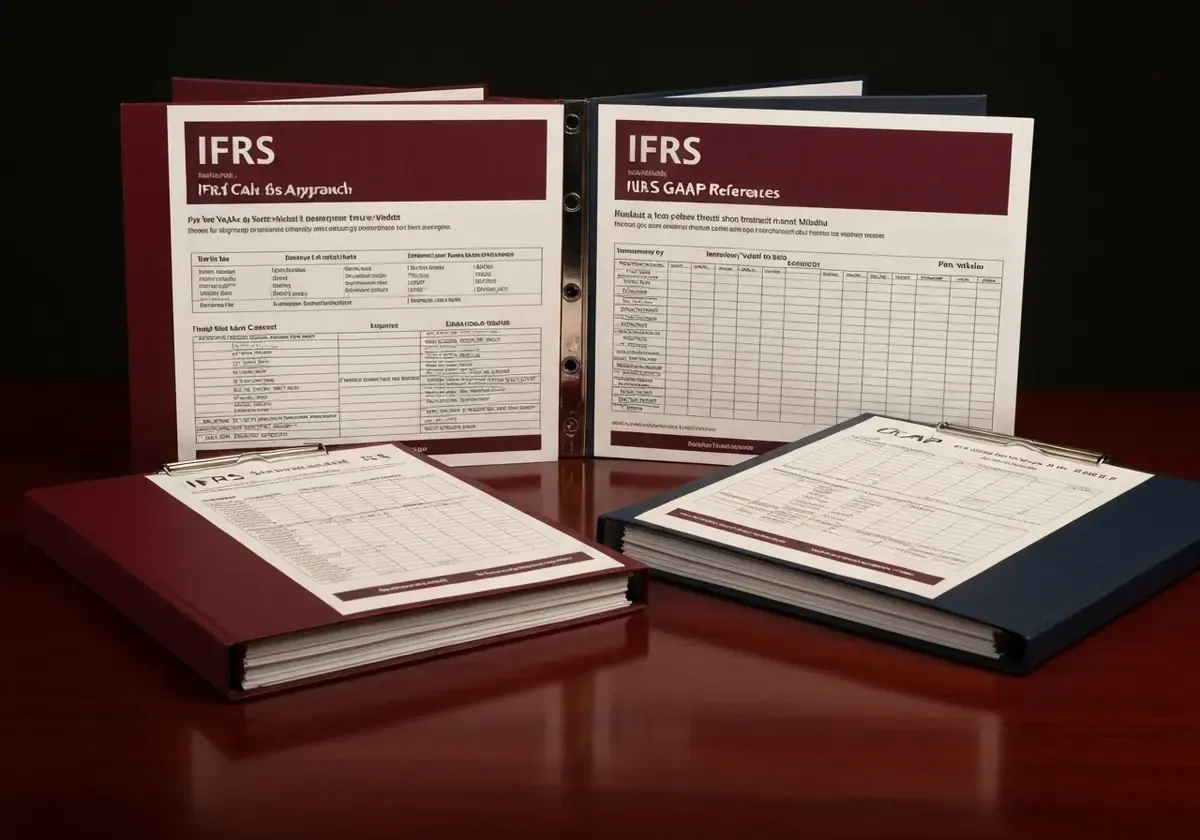
- IAS 1 — Presentation of Financial Statements: sets out the minimum structure and content required in a complete set of financial reports
- IAS 2 — Inventories: defines how to measure and report inventory costs, including the prohibition of LIFO
- IAS 7 — Statement of Cash Flows: requires companies to present a full cash flow statement classified by operating, investing, and financing activities
- IAS 16 — Property, Plant and Equipment: establishes rules for recognizing, measuring, and depreciating tangible long-term assets
- IAS 36 — Impairment of Assets: ensures that assets are not carried at more than their recoverable amount
- IAS 37 — Provisions, Contingent Liabilities and Contingent Assets: guides when and how to recognize uncertain obligations
- IAS 38 — Intangible Assets: addresses the recognition and amortization of assets without physical substance, such as patents and software
What Are the International Financial Reporting Standards IFRS?
- IFRS 1 — First-Time Adoption of IFRS: provides guidance for companies transitioning to IFRS for the first time, including practical expedients
- IFRS 9 — Financial Instruments: covers classification, measurement, and impairment of financial assets and liabilities
- IFRS 15 — Revenue from Contracts with Customers: establishes a five-step model for recognizing revenue that reflects the transfer of goods or services
- IFRS 16 — Leases: requires lessees to recognize most leases on the balance sheet, significantly changing how lease obligations appear in financial statements
- IFRS 17 — Insurance Contracts: introduces consistent accounting for insurance liabilities, replacing the older and inconsistent IFRS 4
- IFRS 10 — Consolidated Financial Statements: defines the principle of control and establishes requirements for preparing group accounts
- IFRS 13 — Fair Value Measurement: provides a single framework for measuring fair value and requires disclosures about those measurements
What Is the Difference Between International Accounting Standards and International Financial Reporting Standards?
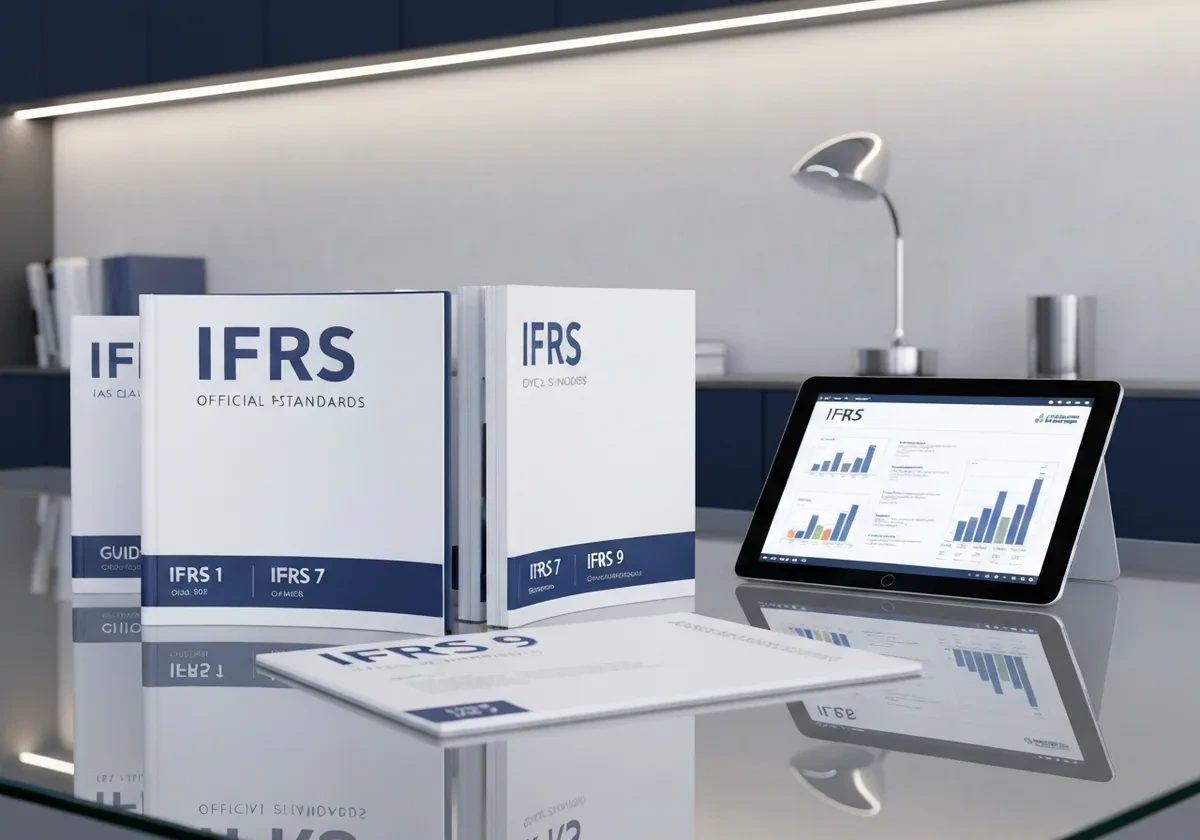
- Origin and timeline: IAS standards were issued before 2001 under the IASC, while IFRS standards were issued from 2001 onward under the IASB — both bodies aimed at global harmonization but operated in different eras
- Scope: IAS standards tend to be narrower in focus, addressing specific topics like leases or inventories, whereas newer IFRS standards often take a broader, principles-based approach
- Status: Most original IAS standards are still active and have not been fully replaced, meaning companies following IFRS must comply with both sets simultaneously
- Complexity: IFRS standards introduced after the 2001 restructuring generally reflect more complex economic realities — derivatives, fair value hierarchies, lease capitalization — that older IAS standards did not anticipate
- Adoption globally: Many countries say they have adopted “IFRS” but in fact use a blend of both IAS and IFRS standards, since the IASB has retained and updated most of the original IAS series
What Is the Difference Between International Accounting Standards and Generally Accepted Accounting Principles?
- Rule-based vs. principles-based: GAAP, particularly US GAAP, is famously rule-based with detailed prescriptive guidance for almost every scenario; international accounting standards take a more principles-based approach, requiring more professional judgment
- Inventory valuation: Under GAAP, companies may use LIFO (Last In, First Out) to value inventory — this method is explicitly prohibited under international standards
- Development costs: GAAP requires all research and development costs to be expensed immediately; international standards allow development costs to be capitalized once certain criteria are met
- Revaluation of assets: International accounting standards permit the revaluation of property and equipment to fair value; GAAP generally does not allow upward revaluations after initial recognition
- Extraordinary items: GAAP historically allowed the separate disclosure of extraordinary items; IFRS does not recognize this category at all
- Geographical reach: GAAP is primarily used in the United States, while international accounting standards are adopted or permitted in over 140 countries worldwide
Who Uses Accounting Information?
- Investors and shareholders: They rely on financial statements to assess the profitability and risk profile of a business before committing capital
- Creditors and lenders: Banks and other financing institutions use accounting data to evaluate a company’s ability to service debt and meet financial obligations
- Management and executives: Internal decision-makers depend on accurate accounting information to plan budgets, control costs, and set strategic direction
- Tax authorities: Government revenue agencies use reported financial data to verify that the correct amount of tax has been assessed and paid
- Regulators and stock exchanges: Supervisory bodies require standardized financial disclosures to protect market integrity and ensure fair trading
- Employees and trade unions: Workers and their representatives use financial information to understand company stability and negotiate wages or benefits
- Suppliers and business partners: Before extending credit or entering long-term contracts, commercial partners review financial health to assess counterparty risk
What Is the Impact of International Accounting Standards?
The influence of international accounting standards on global business has been profound and, in many ways, quietly transformative. Before widespread adoption, cross-border investment decisions were complicated by the fact that two identical companies could report wildly different financial results simply because they followed different local rules. Standardization changed that. Investors gained a baseline of comparability, and companies gained access to deeper pools of global capital.
Here is the thing, though — the impact is not uniformly positive from every angle. Smaller companies often find that the detailed disclosure requirements and fair value measurements imposed by these standards create a compliance burden that large multinationals absorb easily but that strains the resources of a mid-size regional business. That tension is real and worth taking seriously. OMK’s certified accounting office regularly advises clients on how to manage these obligations without letting compliance infrastructure overwhelm core business operations.
Beyond costs, the standards have reshaped how companies think about their balance sheets. Recognizing lease liabilities under IFRS 16, for example, fundamentally altered the leverage ratios of companies in retail and aviation. Financial ratios that analysts and lenders had used for decades suddenly needed recalibration. That kind of systemic shift does not happen quietly — it ripples through credit ratings, loan covenants, and investor sentiment all at once.
Barriers to Applying International Accounting Standards
- Lack of qualified professionals: One of the most persistent barriers to applying international accounting standards is a shortage of accountants who are fully trained in IFRS requirements — many firms simply do not have the in-house expertise to apply complex standards correctly
- High implementation costs: Transitioning to international accounting standards requires significant investment in staff training, accounting software upgrades, and potentially external consultants, which creates a steep financial hurdle especially for smaller organizations
- Resistance to change: Organizational culture often resists the shift from familiar local accounting practices to a new framework, particularly when management does not clearly understand the long-term benefits
- Regulatory and legal conflicts: In some jurisdictions, local tax laws or commercial regulations require accounting treatments that directly conflict with international standards, forcing companies to maintain parallel sets of records
- Language and translation barriers: Official IFRS pronouncements are published in English, and translated versions sometimes introduce ambiguities that create inconsistent application across different countries
- Inadequate technological infrastructure: Applying these standards accurately often requires sophisticated ERP systems capable of handling multi-currency consolidations, fair value inputs, and complex lease calculations — systems that many businesses have not yet invested in
- Frequent updates and amendments: The IASB issues regular updates and interpretations, and keeping pace with those changes demands ongoing professional development that many organizations treat as a low priority until a problem surfaces
Advantages of Applying International Accounting Standards
- Greater transparency and credibility: Financial statements prepared under international standards are more transparent, which builds confidence among investors, lenders, and regulators
- Improved access to international capital: Companies that adopt these standards can raise funds from global investors more easily because their financials are immediately understandable across markets
- Stronger comparability across companies: Analysts and stakeholders can meaningfully compare the financial performance of companies operating in different countries, improving market efficiency
- More disciplined internal reporting: The rigorous requirements of international standards encourage better internal controls, cleaner data management, and more disciplined financial reporting practices overall
- Reduced cost of capital: Studies have consistently shown that companies adopting international financial reporting standards IFRS experience a reduction in their cost of equity capital, as perceived information risk drops
- Simplified group consolidations: For multinational groups, having all subsidiaries report under the same standards dramatically simplifies the consolidation process and reduces the risk of intercompany errors
- Enhanced reputation with global partners: Suppliers, customers, and strategic partners in other countries gain immediate confidence when they see that a company follows international accounting standards
Frequently Asked Questions
What Are the Main Barriers to Applying International Accounting Standards in Developing Countries?
The barriers to applying international accounting standards in developing economies are often more structural than technical. Most commonly, the challenge starts with a thin talent pool — there simply are not enough trained accountants who understand IFRS at the depth required for complex transactions. Layer on top of that the cost of technology upgrades, the conflict between local tax regulations and international reporting rules, and a regulatory environment that has not yet updated its legal framework to accommodate these standards, and you have a compounding set of obstacles. Organizations like OMK, operating as a certified public accounting office, provide the specialized expertise that bridges this gap for clients who cannot build that capability entirely in-house.
How Do International Accounting Standards Differ from GAAP?
The core philosophical difference is rules versus principles. GAAP, especially in the United States, provides exhaustive rule-based guidance designed to minimize the need for professional judgment — there is usually a specific rule for every situation. International accounting standards take the opposite approach: they establish broad principles and expect qualified professionals to apply judgment within those boundaries. This makes international standards more flexible and adaptable but also more dependent on the quality of the accountant interpreting them. Neither approach is inherently superior — it depends on the regulatory culture, the sophistication of the capital market, and the depth of professional talent available in each country.
Can a Small Business Benefit from Adopting International Financial Reporting Standards IFRS?
Absolutely — though the path looks different for smaller entities. The IASB developed a specific version called IFRS for SMEs, which is a simplified, self-contained version of the full international financial reporting standards IFRS framework designed with smaller businesses in mind. It eliminates many of the complex measurement requirements and reduces disclosure obligations significantly. A small business that exports, seeks bank financing, or is planning to attract outside investors will find that adopting even a simplified version of these standards opens doors that purely local accounting never could. OMK’s accounting office has helped dozens of growing businesses make this transition efficiently.
The barriers to applying international accounting standards are real, but they are not permanent. With the right expertise, the right tools, and the right professional guidance, businesses of all sizes can navigate these obstacles and unlock the genuine benefits that come with international compliance. Whether you are wrestling with staff training, software gaps, or the sheer complexity of IFRS transition, OMK’s certified public accounting office stands ready to guide you through every stage of the process. Reach out to OMK today and let a qualified team of accounting professionals turn a complicated obligation into a strategic advantage.