
Understanding what a tax identification number is forms the foundation of any serious business operation in the Kingdom. A tax identification number is the unique numeric code that the Zakat, Tax and Customs Authority (ZATCA) assigns to every registered taxpayer — whether that’s a company, a sole trader, or a partnership — so the government can track financial obligations accurately and efficiently.
Most business owners encounter this requirement early, yet surprisingly few take the time to understand what it really means or how to manage it properly. That’s exactly where a certified public accounting office like OMK steps in — offering structured, practical guidance so you never find yourself on the wrong side of a compliance requirement.
What Is a Tax Identification Number?
A tax identification number is far more than an administrative formality. It’s essentially your business’s fiscal identity — the number that appears on every VAT invoice you issue, every tax return you file, and every official communication you have with ZATCA. Without it, you cannot legally collect VAT, claim input tax credits, or participate in government tenders. Think of it as the financial equivalent of a national ID card, except it belongs to your business rather than to you personally.
What’s interesting here is that the number doesn’t just identify you — it also signals to your customers and partners that your business is formally registered and tax-compliant. In a market where trust and credibility drive purchasing decisions, that signal carries real weight. Large corporate buyers and government entities routinely verify a supplier’s tax identification number before signing any contract, making tax number verification a standard step in Saudi B2B due diligence.
What Does a Tax Identification Number in Saudi Arabia Consist Of?

The Saudi tax identification number is a fifteen-digit numeric code structured according to a specific internal logic used by ZATCA. The digits are not random — they encode information about the taxpayer category, the registration sequence, and a check digit that allows automated systems to validate the number’s authenticity instantly.
For VAT-registered businesses, this same number doubles as the VAT registration number, which is why you’ll often hear it called the VAT number or the tax number interchangeably. The consistency is intentional: ZATCA designed the system so that a single identifier covers multiple tax obligations, reducing administrative duplication and making VAT number verification straightforward for anyone who needs to confirm a supplier’s standing. Understanding this structure matters because errors in even one digit on a tax invoice can render that invoice legally invalid.
How Do You Get a Tax Identification Number in Saudi Arabia?
The process of tax number issuance in Saudi Arabia runs entirely through ZATCA’s digital infrastructure, which means you can complete most steps online. Here is exactly what the journey looks like:
- Register on the ZATCA portal (zatca.gov.sa) using the business owner’s national ID or Iqama number and a verified mobile number linked to the Absher platform.
- Complete the taxpayer registration form by entering the commercial registration number, legal entity type, primary business activity, and contact details.
- Submit the application and wait for ZATCA’s automated verification, which cross-checks your data against the Ministry of Commerce’s commercial registry in real time.
- Receive a confirmation SMS and email once the system approves the registration — your tax identification number is issued at this point and immediately active.
- Download the official tax certificate from your ZATCA account dashboard, which shows your number, registration date, and registered business name.
- If you expect your annual taxable revenue to exceed SAR 375,000, simultaneously apply for VAT registration in the same portal session to avoid having to repeat the process later.
- Keep a copy of the tax certificate in your accounting records, as certified accounting offices like OMK will reference it frequently during bookkeeping and audit preparation.
How Do You Look Up a Tax Identification Number and Confirm It?
Tax number lookup — or what’s formally called tax number inquiry — is a service ZATCA provides publicly so that any party can confirm whether a given number is valid and active. Here’s how to do it:
- Visit the official ZATCA website and navigate to the “Taxpayer Lookup” or “Tax Number Verification” section on the home page.
- Enter the fifteen-digit number you want to verify in the search field exactly as it appears on the invoice or document you’re checking.
- Click the verify button and review the result — the system will display the registered business name and status if the number is valid.
- For VAT number verification specifically, use ZATCA’s dedicated VAT verification tool, which confirms whether a number is currently registered for VAT and whether the registration is active or suspended.
- Save a screenshot or download the verification result if you need it for audit documentation or supplier onboarding records.
- Contact OMK’s certified accounting office if the verification returns an unexpected result, such as a mismatch between the name on record and the name on the invoice — this can indicate fraud or a data entry error that needs urgent correction.
How Do You Verify a Tax Identification Number?
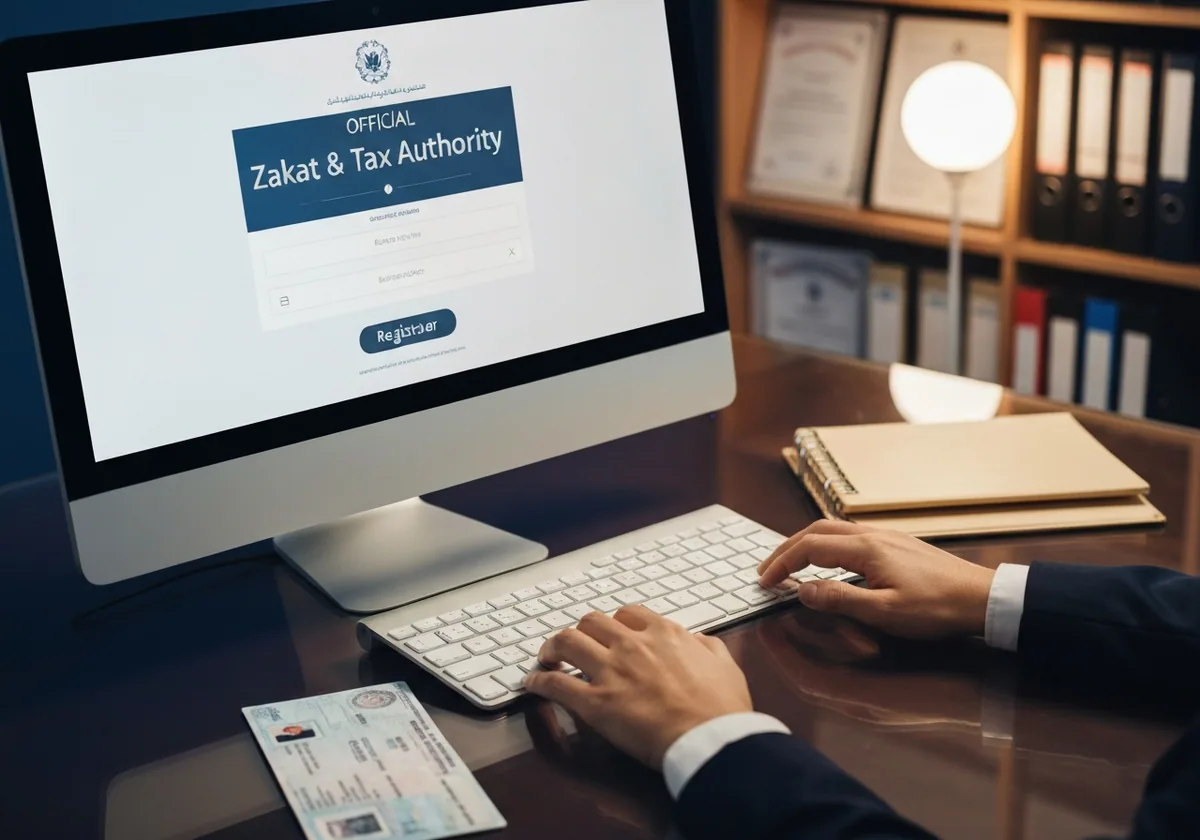
Verification goes a step beyond simple lookup. When you verify a tax identification number, you’re confirming not just that the number exists in ZATCA’s database, but that it belongs to the specific entity claiming it and that the entity is in good standing. This matters enormously in situations involving new supplier relationships, large contracts, or any transaction where the VAT on the invoice will be reclaimed as input tax.
Here’s the thing — a fraudulent or inactive tax number on a purchase invoice means you cannot legally recover that VAT, which turns a routine business expense into a financial loss. ZATCA auditors check exactly this during tax inspections, and penalties for claiming input tax on invalid invoices can be severe. The practical approach is to run a verification check on every new supplier before you process their first invoice, not after. OMK’s accounting office routinely builds this step into its clients’ accounts payable procedures as a standard compliance control.
What Is the Importance of a Tax Identification Number in Saudi Arabia?
The significance of this number extends across virtually every dimension of business life in the Kingdom:
- It is a legal prerequisite for issuing VAT-compliant invoices — no valid tax number means no valid invoice, which can disrupt your entire revenue cycle.
- Government and semi-government entities will not process payments to suppliers who cannot provide a confirmed tax identification number.
- It enables ZATCA to assign your business to the correct tax filing schedule, whether monthly or quarterly, based on your revenue bracket.
- It forms the basis of e-invoicing (Fatoorah) compliance, which is now mandatory for all VAT-registered businesses in Saudi Arabia.
- It protects your business’s reputation by demonstrating regulatory compliance to partners, investors, and auditors.
- It is required for any application involving import or export customs clearance through ZATCA’s integrated customs systems.
- Certified accounting offices like OMK use it as the anchor reference point for all tax filings, zakat calculations, and financial statements prepared on your behalf.
What Are the Uses of a Tax Identification Number in Saudi Arabia?
- Issuing legally valid VAT invoices to customers — both standard tax invoices and simplified invoices must carry the seller’s number.
- Filing periodic VAT returns through the ZATCA portal, where the number identifies your account and maps submissions to your tax record.
- Submitting annual zakat declarations, since the same number links your business to the zakat assessment database.
- Participating in government procurement portals such as Etimad, where the number is a mandatory registration field.
- Completing customs import and export declarations, where ZATCA cross-references the importer’s tax number with their commercial registration.
- Applying for tax rulings or dispute resolution procedures with ZATCA, where correspondence is always tagged to the registered number.
- Enabling your external auditors and certified accounting offices — including OMK — to access your tax history and file on your behalf through authorized representative registration.
How to Cancel a Tax Identification Number

Cancelling a tax identification number is a formal process that businesses undertake when they cease operations, merge with another entity, or change their legal structure in a way that renders the old registration obsolete. The steps are as follows:
- Ensure all outstanding tax returns and VAT filings are submitted and that no unpaid tax liabilities exist on the account before initiating the cancellation request.
- Log in to your ZATCA account and locate the deregistration or cancellation request option under the taxpayer services menu.
- Complete the deregistration form, selecting the reason for cancellation and providing the effective date on which the business stopped its taxable activities.
- Upload any supporting documents ZATCA requires, such as a copy of the commercial registration cancellation certificate or a merger agreement.
- Await ZATCA’s review, during which an officer may contact you to clarify details or request additional documentation.
- Receive the official deregistration confirmation, which closes the tax file and terminates the number’s active status in ZATCA’s system.
How to Update Tax Identification Number Data When Business Information Changes
Business circumstances change — addresses shift, trade names evolve, ownership structures are restructured. When any of this happens, your ZATCA profile must reflect the new reality promptly. Outdated information creates mismatches that trigger compliance flags during audits and can delay VAT refunds or dispute resolutions.
The update process follows this sequence:
- Log in to the ZATCA taxpayer portal using your registered credentials and navigate to the profile or registration data section.
- Identify the specific fields that require updating — common examples include the registered address, the authorized representative’s details, the bank account information linked to refunds, or the principal business activity code.
- Edit the relevant fields and upload supporting documents that substantiate the change, such as a new commercial registration certificate reflecting a name change or an updated lease agreement confirming the new address.
- Submit the amendment request and note the reference number provided by the system for follow-up purposes.
- Monitor the request status through the portal dashboard — most straightforward amendments are processed within a few business days.
Steps to Update Tax Identification Number Data
- Prepare all updated official documents before logging in to avoid an incomplete submission that stalls the process.
- Verify that the updated information matches exactly what appears on your new commercial registration — any discrepancy will cause the request to be rejected.
- Update your e-invoicing system simultaneously so that all new invoices reflect the corrected registered details from the amendment’s effective date.
- Notify OMK’s accounting office of the change so they can update internal records and ensure upcoming filings carry the correct information.
- Request a fresh copy of the updated tax certificate once ZATCA approves the changes, and distribute it to key suppliers and customers who hold your tax details on file.
Frequently Asked Questions
Can a Business Operate in Saudi Arabia Without a Tax Identification Number?
Technically, very small businesses below the mandatory registration threshold can operate without one, but the practical reality is far more limiting than it sounds. Any business that issues tax invoices, deals with corporate clients, bids on government contracts, or expects to grow past the SAR 375,000 annual revenue mark needs to complete tax number extraction and registration immediately. Operating without a number above the threshold is a direct ZATCA violation carrying financial penalties.
How Long Does It Take to Issue a Tax Identification Number in Saudi Arabia?
For most applicants with clean commercial registrations and complete documentation, tax number issuance happens almost instantly through ZATCA’s automated portal — sometimes within minutes of submitting the online form. Cases involving discrepancies in business data or missing documents can take several business days while a ZATCA officer reviews and resolves the issue manually. OMK’s certified accounting office helps clients prepare complete, accurate registration packages so approvals happen without unnecessary delays.
What Happens if My Tax Identification Number Information Becomes Outdated?
This is one of the most overlooked compliance risks in Saudi business operations. If the information registered against your tax identification number no longer matches your actual business details, invoices issued during that period may be challenged during a ZATCA audit, VAT refund claims can be delayed or denied, and your business could face administrative penalties. The fix is straightforward — update the record promptly through the ZATCA portal, ideally with support from a certified accounting office like OMK that understands exactly which documents to submit and how to phrase the amendment request.
Knowing what a tax identification number is and how to manage it isn’t just a bureaucratic checkbox — it’s a cornerstone of running a financially sound, legally compliant business in Saudi Arabia. From the moment of tax number issuance to ongoing VAT number verification, regular data updates, and the rare occasion when deregistration becomes necessary, every stage of this journey has real consequences for your bottom line and your standing with ZATCA. OMK’s certified public accounting office has guided hundreds of businesses through exactly these processes, and the team is ready to help you handle yours with the precision and confidence your business deserves. Reach out to OMK today and make sure your tax compliance is built on solid ground.