
Understanding how to calculate the estimated zakat base is one of those topics that sounds straightforward until you are actually sitting in front of a zakat return and realize how many moving parts there are. The estimated zakat base — known in Arabic-language regulations as the assessed or presumptive zakatable amount — applies when the Zakat, Tax and Customs Authority cannot verify a company’s actual financial records to the required standard. Getting this number right is not optional; it directly determines what a business owes.
Most business owners and even some accountants treat this as a secondary concern, something to sort out later. That is a costly mistake. At OMK, a certified public accounting office with deep experience in Saudi zakat compliance, we work with clients across multiple sectors who discover the real implications of the estimated zakat base only after a dispute has already started. The goal of this guide is to give you a genuinely useful, practical understanding — before that happens.
What Is the Zakat Base and How Does It Relate to the Nisab?
The zakat base is the total amount on which zakat is calculated — think of it as the taxable foundation, but for religious-commercial purposes. It represents the net zakatable wealth of a business during a given lunar year, derived from specific asset and liability categories defined under Saudi zakat rules. The nisab, by contrast, is the minimum threshold a business must reach before zakat becomes obligatory at all. If the zakat base falls below the nisab — currently pegged to the value of 85 grams of gold or 595 grams of silver — no zakat is due for that period.
What is interesting here is that most businesses operating above even a modest level of activity will almost certainly exceed the nisab, so the more pressing question is not whether zakat applies but how the base is measured. The zakat base includes items like inventory, receivables, and cash on hand, reduced by certain short-term liabilities. Getting the composition of that base right is where errors tend to happen, and where a qualified certified accounting office becomes genuinely valuable.
What Is the Difference Between the Estimated Zakat Base and the Accounts-Based Zakat Base?

- The accounts-based zakat base is calculated directly from a company’s audited financial statements — balance sheets, profit and loss accounts, and supporting schedules. The authority accepts these figures at face value, subject to audit.
- The estimated zakat base is applied when the authority determines that the submitted records are incomplete, unaudited, inconsistent, or simply absent. In this case, the authority uses external reference data to construct a presumptive zakatable amount.
- With the accounts-based approach, the company controls the inputs and can optimize the base through legitimate deductions and adjustments.
- With the estimated zakat base, the company loses that control. The authority’s figure stands unless formally challenged through the objection and appeals process.
- Businesses subject to estimation often face a higher effective zakat liability because the authority applies conservative assumptions — meaning fewer deductions are granted.
- Smaller companies and sole-trader-style entities are disproportionately affected, since they are less likely to maintain audited accounts from the outset.
- The distinction matters enormously in practice: switching from an estimated assessment to an accounts-based one can reduce a company’s zakat bill significantly — but only if the underlying records are solid.
Where Does the Authority Get Your Revenue Figure?
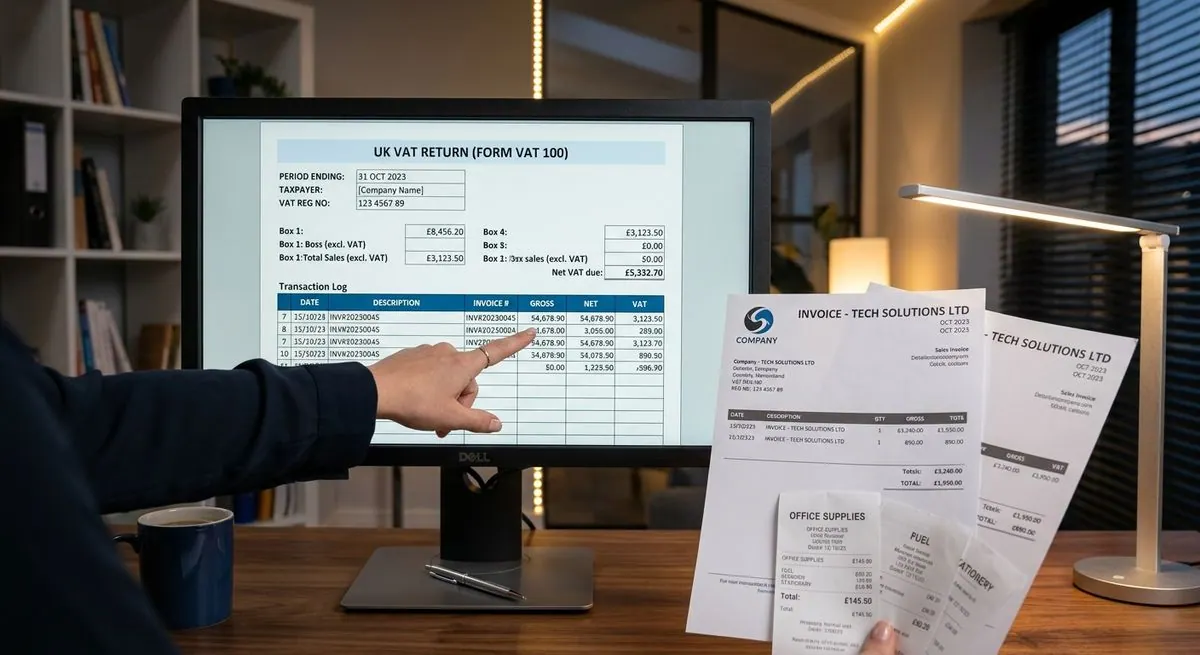
This is a question every business owner should ask, because the answer explains a lot about how estimated assessments are built. The Zakat, Tax and Customs Authority draws on multiple data streams when constructing a presumptive revenue figure. Bank deposit data provided by financial institutions, VAT returns filed by the same company, customs import records, and information shared between government agencies all feed into this picture. The authority is not guessing — it is triangulating.
Because Saudi Arabia operates an increasingly integrated government data infrastructure, a business that thinks it can stay invisible is operating on an outdated assumption. If you filed a VAT return showing revenue of SAR 4 million but submitted a zakat return showing negligible activity, that discrepancy will surface. The authority’s systems are designed to catch exactly that kind of inconsistency, and the result is almost always an estimated zakat base calculated at the higher implied figure.
This is precisely why OMK, as a certified public accounting office, advises clients to reconcile their VAT, zakat, and banking data before any return is filed. When the numbers align across every channel, the authority has no grounds to deviate from the accounts-based approach — and the client stays in control of the calculation.
The Minimum Zakat Under an Estimated Assessment
The concept of a minimum zakat liability under estimated assessment catches many companies off guard. Even when a business claims it has no taxable base, the authority may still impose a floor figure — a minimum assessed zakat amount — based on sector benchmarks or historical filing patterns. This floor is not arbitrary; it is backed by the authority’s comparative data from similar businesses in the same industry and region.
For practical purposes, this means that submitting a zero or near-zero zakat base without supporting documentation does not result in a zero bill. It results in an estimated assessment that is likely to be higher than what a properly documented return would have produced. The minimum is also relevant because it sets the starting point for penalty calculations if a business fails to file altogether. The cost of non-compliance compounds quickly.
Understanding that a floor exists changes the strategic calculation entirely. Rather than avoiding the issue, businesses are better served by engaging proactively — producing the records that let them calculate the actual zakat base — even if that base turns out to be modest.
Steps to Calculate the Estimated Zakat Base
Here is how to calculate the estimated zakat base when working through the authority’s standard methodology:
- Identify the total revenue figure that the authority holds on record — cross-reference VAT returns, bank statements, and any sales data submitted to other government bodies.
- Apply the sector-specific net profit margin percentage that the authority uses for your industry. This is a published benchmark, not a negotiated figure.
- Multiply the resulting net profit estimate by the applicable zakat base multiplier to arrive at the presumptive zakatable wealth figure.
- Deduct any allowable adjustments the authority permits in your sector — long-term liabilities used to finance fixed assets are the most common deductible item.
- Compare the resulting estimated zakat base against the nisab threshold to confirm zakat is due.
- Apply the zakat rate — 2.5% for a full lunar year — to the final base figure.
- Review the output against the minimum assessment floor for your sector. If your calculated figure falls below that floor, the minimum applies.
The Zakat Rate: Lunar Year vs. Solar Year
Zakat in Saudi Arabia is calculated on the basis of the Hijri lunar year, which runs approximately 354 days — around eleven days shorter than the Gregorian solar year. This matters more than most people initially expect. When a company’s fiscal year follows the Gregorian calendar, the authority applies a conversion factor to align the zakat liability with the lunar period.
The standard zakat rate is 2.5% of the zakatable base per full lunar year. When the fiscal period is a Gregorian year, the effective rate adjusts to approximately 2.577% to account for the difference in year length. That adjustment is small in percentage terms but meaningful in absolute money for any business with a large zakat base. A company with a base of SAR 10 million will see a difference of tens of thousands of riyals depending on which year basis is applied.
Most accounting software does not handle this conversion automatically. It is one of the details that a certified accounting office like OMK builds into its zakat calculation process as a matter of course — because overlooking it creates either an underpayment (with penalties) or an overpayment (with no automatic refund).
The Difference Between the Zakat Base and the Tax Base
- The zakat base is rooted in Islamic jurisprudence and represents net zakatable wealth — it focuses on assets held and grown over the year, not just on profit.
- The tax base for income or withholding tax purposes follows accounting profit principles, referencing revenue, expenses, and depreciation in a conventional financial reporting sense.
- Non-Saudi shareholders in a company are subject to income tax, not zakat. Saudi and GCC shareholders are subject to zakat. A mixed-ownership company is assessed on a proportional basis.
- Certain items increase the zakat base but reduce the tax base — for example, non-deductible provisions that reduce accounting profit but are added back for zakat purposes.
- The zakat base assessment model does not allow the same depreciation schedules that reduce taxable income. Fixed assets are treated differently under each regime.
- Losses carried forward can reduce the income tax base in subsequent years but do not automatically reduce the zakat base the same way.
- Understanding which base applies to which ownership percentage is one of the first things a certified accounting office should clarify when onboarding a new corporate client.
Filing Deadlines and Regulatory Obligations for Zakat Returns

The zakat return must be filed within 120 days from the end of the company’s financial year. For companies following the Hijri calendar, that deadline falls 120 Hijri days after year-end. For those on the Gregorian calendar, it is 120 Gregorian days — but the zakat calculation itself still uses the lunar year conversion. Missing this deadline triggers an automatic penalty: 1% of the zakat due for each 30-day period of delay, capped at 25%.
Beyond the filing deadline, companies should be aware that the authority can conduct a zakat audit going back five years. Any discrepancy found during that audit — particularly one that results in an upward revision of the zakat base — will attract both the additional zakat owed and late payment surcharges. Businesses that rely on estimated assessments year after year without ever transitioning to an accounts-based return are accumulating audit risk, not avoiding it.
At OMK, we treat the filing deadline as a project milestone, not a deadline to scramble toward. Proper planning means the zakat base calculation — whether estimated or accounts-based — is ready well before the 120-day window closes, leaving time for internal review and any corrections.
Steps to Submit a Zakat Return Through the Authority’s Portal
- Log in to the Zakat, Tax and Customs Authority’s online portal using the company’s registered national credentials.
- Navigate to the zakat services section and select the relevant fiscal year for which the return is being filed.
- Enter the company’s financial data in the designated fields: assets, liabilities, revenue, and any deductible items.
- Upload supporting documentation — audited financial statements, bank reconciliations, and any schedules required by the authority for your sector.
- Review the system’s auto-calculated zakat base and compare it against your own calculation to identify any discrepancies before submission.
- If the portal produces an estimated assessment that differs from your accounts-based figure, use the objection function within the portal to flag the difference and submit your supporting evidence.
- Confirm submission and retain the acknowledgment reference number. This reference is essential if any follow-up communication with the authority is needed.
Common Mistakes When Dealing with an Estimated Zakat Assessment
- Accepting the estimated assessment without filing an objection — many companies assume the figure is final when it is not. The authority’s estimation is a starting point, and businesses have the right to challenge it within the statutory timeframe.
- Failing to reconcile VAT and zakat data before filing — inconsistencies between these two returns are the single most common trigger for an estimated zakat base being applied in the first place.
- Ignoring the lunar-to-solar year conversion — applying a flat 2.5% to a Gregorian-year base without adjustment leads to a miscalculated liability.
- Treating fixed assets as part of the zakatable base when they are explicitly excluded under the applicable rules — this inflates the base unnecessarily.
- Missing the 120-day filing deadline and assuming a short delay will go unnoticed — the authority’s systems flag late filings automatically, and penalties begin accruing from day one.
- Not retaining documentation for the full five-year audit window — businesses that cannot produce records from prior years have no defense if an estimated reassessment is raised retroactively.
- Conflating the zakat base with the VAT taxable supply — these are entirely different figures calculated under different legal frameworks, and mixing them up produces errors in both returns.
Frequently Asked Questions
What happens if a company disagrees with the estimated zakat base assigned by the authority?
A company has the right to file a formal objection with the Zakat, Tax and Customs Authority within 60 days of receiving the estimated assessment. The objection must be supported by audited financial statements or other credible documentation that justifies an alternative base figure. If the authority upholds its original estimate, the company can escalate the matter to the Tax and Customs Violations Review Committee, and ultimately to the administrative courts. The key is acting within the deadlines — missing the objection window eliminates most avenues for appeal.
Can a company switch from the estimated zakat base to the actual accounts-based base?
Yes, and it is almost always worth doing. A company that has historically been assessed on an estimated basis can transition to an accounts-based return by producing audited financial statements prepared according to accepted accounting standards and submitting them alongside the zakat return. The authority generally welcomes this transition because it improves the reliability of the data it receives. Working with a certified accounting office to bring the records up to audit standard before the next filing cycle is the most straightforward path forward.
What documents should a company keep ready before filing its zakat return?
The process of how to calculate the estimated zakat base — and avoiding it in favor of an accounts-based approach — depends heavily on documentation. At a minimum, companies should have audited or reviewed financial statements, a detailed trial balance, bank statements covering the full zakat year, VAT return summaries, fixed asset registers, and schedules of receivables and payables. Having these ready before the filing window opens means the zakat return can be prepared accurately, submitted on time, and defended confidently if the authority raises questions.
The process of how to calculate the estimated zakat base is genuinely manageable once you understand the logic behind it — but it rewards preparation and penalizes neglect. Businesses that maintain clean, audited records, reconcile their data across regulatory filings, and engage with the zakat return proactively will almost always end up in a better position than those who wait for an estimated assessment to arrive and then try to dispute it. If you want to stop leaving this to chance, reach out to OMK. As a certified public accounting office with hands-on experience in Saudi zakat compliance, OMK can review your current position, identify where an estimated assessment risk exists, and put a filing strategy in place that keeps you in control of the number.