
Understanding how to open a tax account for individuals is one of those things most people put off until they absolutely have to deal with it — and by then, they’re scrambling. The Saudi Zakat, Tax and Customs Authority (ZATCA) has made significant strides in digitalizing the registration process, but the steps still require careful attention to avoid delays or penalties. Whether you’re a freelancer, a self-employed professional, or an individual with taxable income, this guide walks you through everything you need to know.
At OMK, a trusted certified accounting office, we work with individuals and businesses alike to navigate the tax registration process with confidence. Our team has seen firsthand how small oversights during registration can lead to complications down the line. The goal here is to give you practical, honest information — not a recycled FAQ. Let’s get into it.
The Minimum Threshold for VAT Registration
Before anything else, it’s worth understanding where the VAT registration requirement actually kicks in. In Saudi Arabia, individuals and entities are required to register for VAT if their taxable supplies and imports exceed SAR 375,000 per year. This is the mandatory registration threshold. There is also a voluntary threshold of SAR 187,500 — meaning if your annual taxable revenue exceeds this lower figure but hasn’t yet crossed the mandatory mark, you can still choose to register and benefit from input tax recovery.
What’s interesting here is that many individuals operating as sole traders or independent consultants don’t realize they’ve crossed this threshold until they’re audited. The tax registration record — what ZATCA refers to as the official registry of your tax status — is tied directly to your income activity, not just your business formation. If you’re earning and not registered, that gap is something ZATCA’s automated systems are increasingly good at catching. Don’t let that be you.
When Must You Register for VAT?
The timing of your VAT registration is not optional — it’s legally mandated once you hit the threshold. Registration must happen within 30 days of the end of the month in which your taxable supplies exceeded SAR 375,000. Miss that window, and you’re already looking at potential fines. The Zakat and Income Authority number — your unique identifier within the ZATCA system — is issued upon successful registration and is what allows you to file returns, issue compliant invoices, and recover input tax.
Here’s the thing most people overlook: VAT registration and income tax registration are distinct processes. An individual might need both, one, or neither depending on their activity. A Saudi national with employment income alone typically has no VAT obligation. But a resident running a freelance design business, a rental portfolio, or any commercial activity that generates taxable supplies absolutely needs to address this. Consulting with a certified accounting office like OMK before you start your activity — not after — saves you from retroactive headaches.
Steps to Register in the Saudi Tax System
The process of how to open a tax account for individuals through ZATCA’s online portal is more straightforward than most people expect, provided you have everything ready. Here is the full sequence:
- Visit the official ZATCA portal at zatca.gov.sa and create a new account using your national ID number or Iqama number.
- Verify your identity through the Absher platform — this is a mandatory step that links your tax profile to your official government identity.
- Complete the taxpayer profile section, which includes your activity type, expected annual revenue, and contact information.
- Upload the required supporting documents: a copy of your national ID or Iqama, proof of address, and any business license if applicable.
- Submit your application and await the confirmation email, which typically arrives within three to five business days.
- Once approved, download and save your tax certificate — this document contains your individual tax number and serves as official proof of your registration status.
- Set up your e-invoicing credentials if your activity falls under the mandatory e-invoicing scope, which ZATCA has been expanding progressively.
Penalties for Failing to Register for VAT
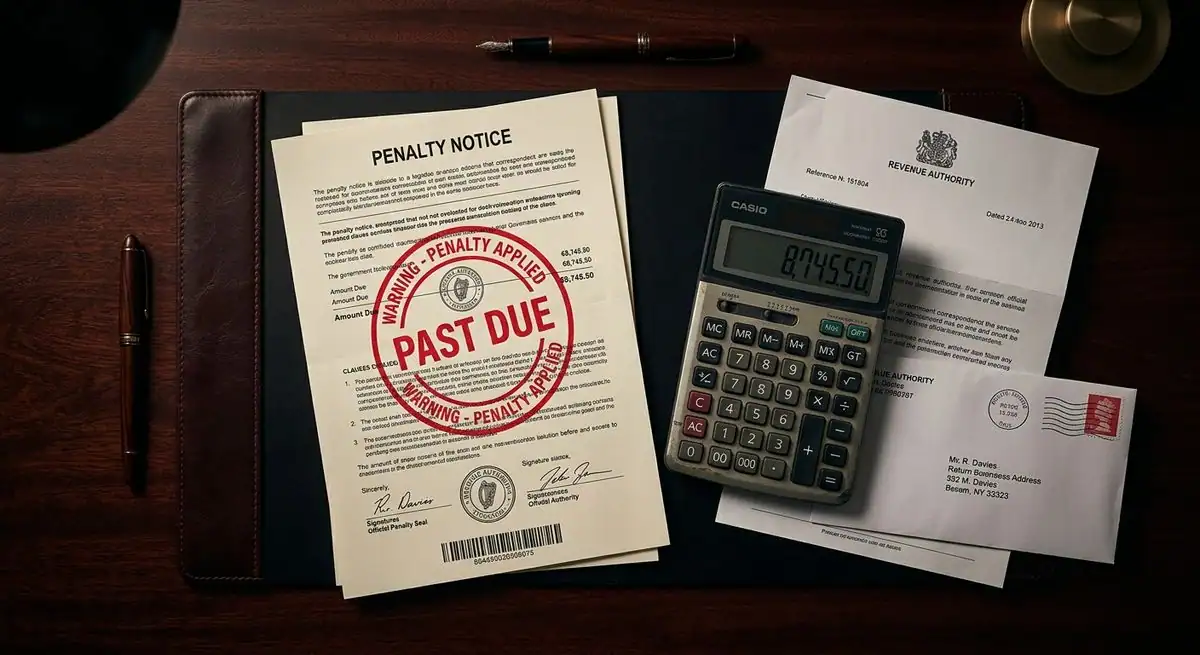
Non-compliance with VAT registration requirements carries real financial consequences. ZATCA doesn’t treat registration failures lightly, and the penalty structure is designed to discourage delay.
- A fine of SAR 10,000 for failure to register within the required timeframe.
- Back-assessment of VAT on all taxable supplies made during the unregistered period, effectively creating a debt to ZATCA from past revenue.
- An additional penalty of 5% to 25% of the unpaid tax amount depending on the duration of non-compliance.
- Potential suspension of commercial activity and freezing of business accounts in cases of prolonged or deliberate non-registration.
- Reputational consequences when dealing with government contracts or tenders, which often require proof of valid tax registration.
- In severe cases, referral to the Public Prosecution, particularly when non-registration is coupled with evidence of deliberate tax evasion.
Benefits of VAT for Consumers
It may seem counterintuitive to list benefits of a tax that consumers pay, but VAT genuinely serves important functions that most people don’t think about when they see it on a receipt.
- VAT revenues directly fund public infrastructure — roads, hospitals, schools, and government services that benefit everyone in the country.
- The tax system creates a transparent paper trail for commercial activity, which protects consumers from fraudulent businesses that operate entirely off the books.
- Registered businesses are required to issue standardized invoices, giving consumers clearer documentation for returns, warranties, and disputes.
- The VAT framework encourages businesses to formalize their operations, which raises overall service quality and accountability in the market.
- Consumers who are also VAT-registered individuals or businesses can recover input tax on legitimate business expenses, reducing the actual cost burden.
Canceling VAT Registration
Deregistration from VAT is an option available to those whose taxable supplies drop below the voluntary threshold of SAR 187,500, or who have ceased their commercial activity altogether. The process is handled through the same ZATCA online portal where you originally registered. You’ll need to submit a deregistration request, settle any outstanding VAT liabilities, and file a final VAT return covering the period up to the date of cancellation.
The tax registration record doesn’t simply disappear upon deregistration — ZATCA maintains historical records and can still audit previous periods after you’ve deregistered. This is a point that catches many people off guard. If you’re considering deregistration, it’s genuinely worth having a conversation with a certified accounting office like OMK first, because the timing of deregistration relative to your filing deadlines can have financial implications you might not anticipate.
VAT Evasion and Its Consequences
Tax evasion is treated as a serious criminal offense in Saudi Arabia, not merely an administrative infraction. Understanding what constitutes evasion — versus an honest mistake — is important.
- Deliberately failing to register for VAT despite meeting the threshold is classified as tax evasion, not just non-compliance.
- Issuing invoices that misrepresent the taxable value of goods or services is a criminal act subject to prosecution.
- Claiming false input tax deductions by fabricating purchase invoices can result in imprisonment and fines of up to three times the evaded tax amount.
- Operating a business under a different person’s tax number to conceal the true taxpayer’s identity is treated as fraud.
- Failing to file tax returns — known as the tax return filing obligation — while continuing to conduct taxable activity is treated as deliberate evasion after the first missed deadline.
Issuing an Individual Tax Number
The individual tax number is essentially your permanent identifier within the Saudi tax ecosystem. Once you complete your registration, ZATCA issues this number automatically as part of your tax certificate. It’s linked to your national ID or Iqama and cannot be transferred or duplicated. Every VAT invoice you issue must carry this number, and every tax return you file is tracked against it.
What many individuals don’t realize is that the individual tax number also appears on the ZATCA public verification portal, which means your customers and partners can verify your registration status before doing business with you. This transparency is actually a selling point — it signals legitimacy. At OMK, our certified accounting office regularly helps clients understand how to use their tax number correctly in their invoicing and documentation to avoid compliance issues.
Checking Your Individual Tax Number
If you’ve already registered but can’t locate your individual tax number, there are several ways to retrieve it:
- Log into your ZATCA portal account and navigate to the taxpayer profile section — your tax number is displayed on the registration certificate available for download there.
- Contact ZATCA’s customer service center directly with your national ID or Iqama number, and a representative can confirm your registration details.
- Use the ZATCA mobile application, which allows registered users to access their tax profile and certificate from a smartphone.
- Check any previously issued VAT invoice or official correspondence from ZATCA — the number should appear on all formal documents you’ve received.
- Visit a ZATCA service center in person with your identity documents if you cannot access the online channels.
Verifying a Tax Number Using an Individual’s Tax Number
Verification is a two-step process that protects both buyers and sellers from dealing with unregistered parties.
- Go to the official ZATCA website and locate the “Taxpayer Lookup” or verification tool on the homepage.
- Enter the individual tax number you wish to verify in the designated field.
- The system will return the registration status, the name associated with the tax number, and the validity of the registration.
- Confirm that the name matches the entity or individual you are dealing with — discrepancies are a red flag.
- If the number returns as invalid or unregistered, do not proceed with a VAT transaction and contact ZATCA to report the issue.
How to Verify a Tax Number Using a VAT Certificate Number
An alternative verification method uses the VAT certificate number rather than the tax number itself. This is particularly useful when a supplier provides you with their certificate as proof of registration but you want independent confirmation. On the ZATCA portal, there is a dedicated field for certificate-based lookup — enter the certificate number exactly as it appears on the document, including any leading zeros.
The system cross-references the certificate number against the live database and returns the same information as the tax number lookup. One thing to keep in mind: certificates do have expiry considerations tied to the taxpayer’s compliance status. A certificate that was valid six months ago may have been suspended if the taxpayer fell into non-compliance. Always verify at the time of the transaction, not just once at the start of a business relationship. The certified accounting team at OMK advises clients to make this verification a standard part of their vendor onboarding process.
How to Cancel an Individual Tax Number
Canceling an individual tax number follows a specific sequence to ensure no obligations are left unresolved.
- Log into your ZATCA online account and navigate to the registration management section.
- Select the “Request Deregistration” option and indicate the reason for cancellation — cessation of activity, falling below threshold, or other applicable reason.
- File any outstanding tax returns that cover periods up to the date of your deregistration request.
- Settle all outstanding VAT liabilities — no deregistration request will be processed while there is an unpaid balance on your account.
- Submit supporting documentation that justifies the deregistration, such as a business closure certificate or evidence of income falling below the threshold.
- Await ZATCA’s review, which typically takes between 5 and 15 business days.
- Once approved, download and retain the deregistration confirmation letter for your records — this is your proof that the tax number has been officially canceled.
Frequently Asked Questions
What documents are required to open a tax account for individuals in Saudi Arabia?
To complete the process of how to open a tax account for individuals, you’ll need your national ID card or Iqama, a verified Absher account for identity confirmation, proof of your business or commercial activity, and your contact details including a valid email address and phone number. If you operate from a physical location, a proof of address document may also be requested. OMK’s certified accounting office can help you prepare and organize these documents before you begin the application to avoid any back-and-forth with ZATCA.
How long does it take to receive an individual tax number after registration?
In most cases, ZATCA processes individual registration applications within three to five business days when all documents are complete and correctly submitted. Your individual tax number — part of the broader tax registration record — is issued within this window and becomes immediately active. Delays typically occur when documents are missing, information conflicts with Absher records, or the application is submitted during peak periods. Submitting everything correctly the first time is the fastest path to receiving your number.
Can a certified accounting office like OMK help me manage my tax account?
Absolutely — and it’s one of the most practical decisions you can make. Managing your Zakat and Income Authority number, filing tax returns on time, handling VAT invoice compliance, and staying current with ZATCA’s evolving regulations is genuinely complex. OMK operates as a full-service certified accounting office that supports individuals throughout the entire tax lifecycle, from initial registration to ongoing return filing and, when needed, deregistration. Having professional support means fewer errors, fewer penalties, and more confidence in your compliance standing.
Navigating the Saudi tax system as an individual doesn’t have to be overwhelming — but it does require getting the details right from the start. Knowing how to open a tax account for individuals, understanding your obligations under VAT, and staying compliant with ZATCA’s requirements protects you legally and financially. Whether you’re at the registration stage or dealing with a more complex situation like deregistration or a tax audit, the smartest move is to work with professionals who know this terrain. Reach out to OMK’s certified accounting office today and let our team ensure your tax affairs are handled accurately, on time, and without unnecessary stress.