Finding the right financial partner for your business is one of those decisions that quietly shapes everything else. Accounting firms in Riyadh range from small boutique practices to large regional offices, and the difference in quality between them is enormous — far more than most business owners realize until something goes wrong. Whether you are launching a new company, managing rapid growth, or simply trying to stay compliant with Saudi regulations, the firm you choose will either make your financial life easier or considerably harder.
The good news is that OMK, a certified public accounting office, has built a strong reputation across Riyadh precisely because it approaches client relationships differently. Rather than treating each engagement as a transaction, OMK invests in understanding the full picture of your business — your structure, your goals, your risk exposure — and then builds a financial framework that actually supports long-term decisions.
What Does a Certified Public Accounting Office in Riyadh Actually Do?
Most people think of accounting as little more than bookkeeping and tax filing. That perception undersells the real value of a qualified certified public accounting office by a significant margin. At its core, a professional accounting office in Riyadh handles the full lifecycle of a company’s financial reporting: from recording daily transactions and reconciling accounts, to preparing audited financial statements that satisfy both local regulatory authorities and international standards.
Beyond compliance, a serious accounting company provides strategic insight. They analyze cash flow patterns, flag inefficiencies in your cost structure, prepare financial models for investor presentations, and advise on corporate restructuring when business conditions shift. The audit office function is equally critical — independent audits verify that your financial statements are accurate, which protects you legally and builds credibility with banks, investors, and government entities. When you work with OMK, you are not simply hiring someone to file paperwork. You are bringing in a financial intelligence partner.
Riyadh’s regulatory environment has evolved considerably in recent years, particularly with Vision 2030 initiatives reshaping commercial requirements. A skilled accounting office in Riyadh stays ahead of these changes, ensuring clients remain compliant before penalties arise rather than scrambling to fix problems after the fact.
When Does Your Business Actually Need a Certified Accounting Office?
Here is the honest truth: most businesses wait too long. They hire an accountant when something breaks — an audit notice, a tax discrepancy, a failed funding round — rather than building the financial infrastructure from the beginning. These are the situations where a certified public accounting office becomes not just helpful but essential:
- Your company is being formally registered or restructured under Saudi commercial law
- You are preparing financial statements for a bank loan or investor due diligence
- Your annual revenue has crossed a threshold requiring mandatory audited accounts
- You have employees and need proper payroll management, GOSI contributions, and labor law compliance
- Your business operates across multiple cost centers or subsidiaries that need consolidated reporting
- You have received a tax assessment, VAT inquiry, or ZAKAT review from the relevant Saudi authorities
- You are expanding into new markets or forming a joint venture and need a clear financial picture first
- Your current bookkeeping is inconsistent and you cannot produce reliable monthly reports
- A major contract requires certified financial statements as part of the tender documentation
- You simply want the peace of mind that comes from knowing your numbers are accurate
Any one of these scenarios justifies engaging accounting offices in Riyadh with the credentials and experience to handle the work properly.
How to Choose the Best Certified Accounting Office in Riyadh
The market has no shortage of options, which actually makes the decision harder rather than easier. Here is a practical framework for evaluating your choices:
- Verify that the office holds official certification from the Saudi Organization for Certified Public Accountants (SOCPA). This is non-negotiable — working with an uncertified provider exposes you to legal and financial risk.
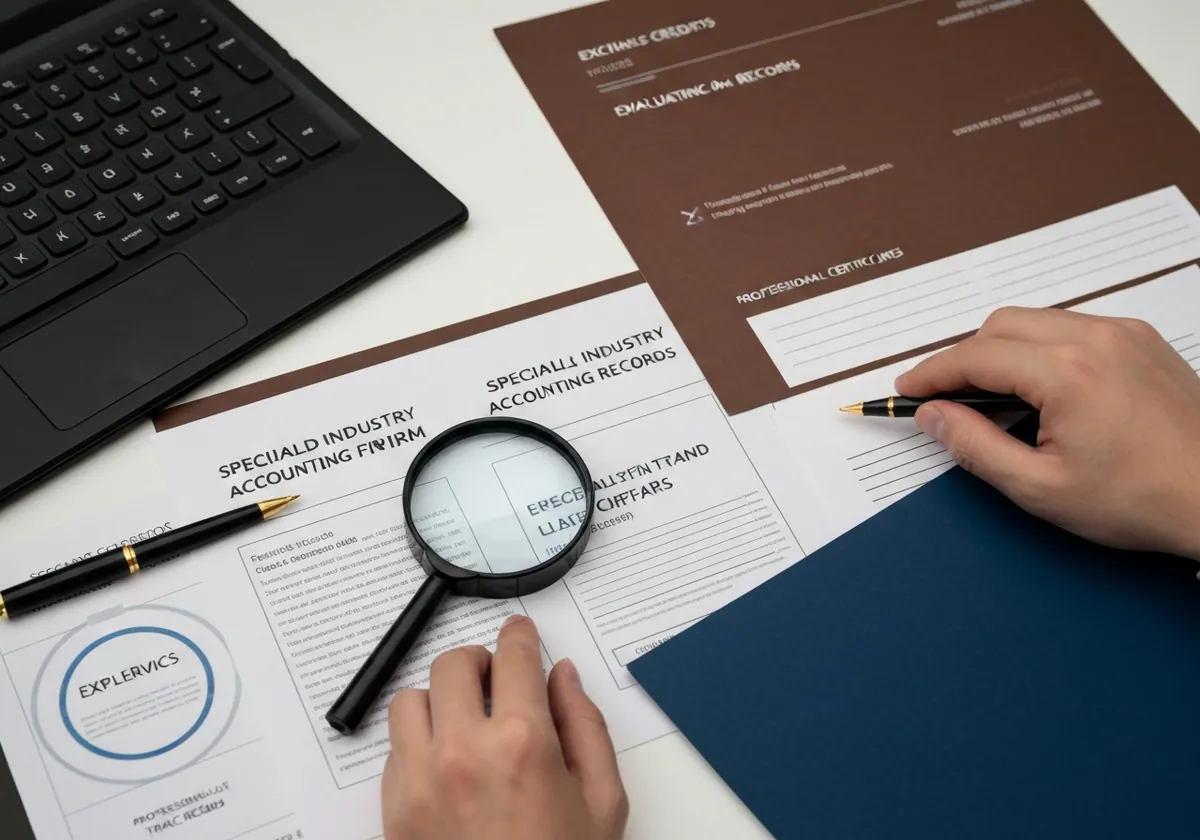
- Check their industry experience. An accounting company that specializes in retail operations may not be the right fit for a construction firm or a technology startup. Sector knowledge matters enormously.
- Ask about their technology infrastructure. Modern accounting offices use cloud-based platforms, automated reconciliation tools, and real-time dashboards. If a firm is still running entirely on manual spreadsheets, that is a warning sign.
- Evaluate communication standards. How quickly do they respond? Do they assign you a dedicated account manager? Will you speak to the same person consistently, or be shuffled between junior staff?
- Request references from existing clients in a similar industry or business size. A reputable firm will have no hesitation providing them.
- Understand their fee structure fully before signing. Hidden costs and vague pricing models are a red flag in any professional services relationship.
- Confirm that their audit office function is genuinely independent — meaning the same team that handles your bookkeeping does not also sign off on your audit, which creates a conflict of interest.
Financial Management Challenges That Startups in Riyadh Face
Startups carry a unique set of financial pressures, and ignoring them early creates compounding problems that become very expensive to fix later. The most common challenges that accounting offices in Riyadh encounter when working with early-stage companies include:
- Inadequate separation between personal and business finances, making accurate profit calculation almost impossible
- No formal chart of accounts, resulting in financial statements that mean nothing to external reviewers
- Inconsistent invoicing practices that distort revenue recognition and create VAT compliance gaps
- Poor cash flow forecasting, leaving founders surprised by liquidity crunches that were entirely predictable
- Failure to register for VAT on time once the mandatory threshold is crossed
- Neglecting to document intercompany transactions when founders operate multiple entities
- Underestimating the complexity of ZAKAT calculations for Saudi-owned entities
- No internal controls over expense approvals, creating vulnerability to errors and fraud
- Delayed financial close cycles that mean management is always looking at stale data
- Treating the accounting function as an afterthought rather than a strategic business asset
Common Mistakes When Choosing an Accounting Office

What is interesting here is that the mistakes business owners make when selecting an accounting firm are remarkably consistent — and almost all of them are avoidable with a little due diligence:
- Choosing based on price alone. The cheapest accounting company in Riyadh is rarely the best value. Errors in financial statements or missed compliance deadlines cost far more than the money saved on fees.
- Ignoring SOCPA certification. Operating with an uncertified provider means your audited accounts may not be legally recognized.
- Failing to define scope clearly. Vague engagement letters lead to disputes about what is included and what incurs additional charges.
- Assuming one accountant handles everything. In a proper certified public accounting office, different specialists handle bookkeeping, tax, audit, and advisory — make sure the firm has the team depth you need.
- Not reviewing work outputs regularly. Handing over your finances and never looking at the reports defeats the entire purpose of the engagement.
- Overlooking communication fit. A technically excellent firm that communicates poorly or responds slowly will frustrate you constantly.
- Waiting until year-end to engage. Retroactive accounting is always more expensive and less accurate than real-time financial management.
Why Choose OMK Office
OMK is not just another name on a list of accounting offices in Riyadh. Here is what genuinely sets this certified public accounting office apart:
- Full SOCPA certification with a team of qualified professionals who hold recognized accounting credentials
- Deep expertise across industries including trading, contracting, technology, hospitality, and professional services
- A dedicated audit office division that maintains strict independence from the bookkeeping and advisory teams
- Modern cloud-based accounting infrastructure giving clients real-time visibility into their financial position
- Transparent, fixed-fee pricing with no surprise invoices at year-end
- Proactive regulatory monitoring — OMK tracks changes to VAT, ZAKAT, and corporate governance rules so clients are never caught off guard
- Bilingual reporting capabilities to support both Saudi and international stakeholder requirements
- A client-first culture where every account receives a dedicated senior contact, not a revolving door of junior staff
- Proven track record supporting startups, SMEs, and established corporations through every stage of growth
Frequently Asked Questions about Accounting Firms in Riyadh
What Services Do Accounting Firms in Riyadh Typically Offer?
Accounting firms in Riyadh generally provide a broad range of financial services covering bookkeeping, VAT and ZAKAT compliance, payroll management, financial statement preparation, external auditing, and advisory services for mergers, acquisitions, and business restructuring. The scope varies by firm — larger, more established accounting offices will offer deeper specialization across each of these areas, while smaller practices may focus on a narrower range of services. When evaluating a provider, always confirm that their specific service offerings match your business’s actual needs.
How Do I Know If an Accounting Office Is Certified and Reliable?
The primary credential to look for in Saudi Arabia is registration with the Saudi Organization for Certified Public Accountants. A legitimate certified public accounting office will display this certification clearly and will have no hesitation providing their registration details on request. Beyond formal credentials, reliability is demonstrated through client references, consistent communication, transparent reporting, and a clear internal process for quality control. OMK meets all of these standards and is happy to walk prospective clients through exactly how its accounting company operates before any commitment is made.
Why Should Startups in Riyadh Hire a Professional Accounting Office Early?
Most people overlook the long-term cost of getting the financial foundation wrong at the startup stage. Early mistakes in chart of accounts structure, VAT registration timing, or intercompany transaction documentation do not stay small — they compound. Engaging one of the professional accounting offices in Riyadh from the beginning means your financial records are clean, your compliance obligations are met on schedule, and you have reliable data to make growth decisions. OMK works with early-stage businesses at pricing structures designed to be accessible, making it practical to start right rather than fix problems later.
Running a business in Riyadh is genuinely demanding, and the financial and regulatory environment requires expertise that goes well beyond basic bookkeeping. The right accounting firms in Riyadh do not just keep records — they protect your business, strengthen your decisions, and create the financial clarity that serious growth requires. OMK has built its reputation as a trusted certified public accounting office by delivering exactly that, consistently, across a wide range of industries and business sizes. Do not leave your financial future to chance. Contact OMK today and let a qualified team take the complexity off your plate.