
Understanding the types of indirect taxes is not just useful for accountants — it is essential knowledge for any business operating in Saudi Arabia. Whether you are a startup founder, a finance manager, or an investor, knowing how indirect taxation works can protect you from unexpected penalties and help you plan your cash flow with real precision.
At OMK, our certified accounting office works daily with businesses of all sizes to navigate the Saudi tax landscape. We have seen firsthand how confusion around tax categories costs companies both money and time. That is exactly why we put this guide together — to give you a clear, practical picture of how the system is structured.
What Are the Types of Taxes in Saudi Arabia?
Saudi Arabia operates a relatively streamlined tax system compared to many countries, but it is far from simple once you look closely. The Kingdom imposes two broad categories of taxes: direct taxes and indirect taxes. Each category targets a different aspect of economic activity, and each carries its own set of rules, rates, and compliance requirements.
Direct taxes are levied on income and profits — they hit the taxpayer directly, with no intermediary involved. Indirect taxes, on the other hand, are built into the price of goods and services, meaning the end consumer often bears the cost without realizing it. Both categories matter enormously for business planning, and understanding types of taxes in Saudi Arabia at this foundational level is the first step toward smart financial management.
1- Direct Taxes:
- Income tax on foreign individuals and entities earning from Saudi sources
- Corporate tax applied to non-Saudi shareholders in resident companies
- Withholding tax deducted at source on certain payments to non-residents
- Zakat, which is a religious levy applied to Saudi and GCC national shareholders
2- Indirect Taxes:
- Value Added Tax (VAT) applied at 15% on most goods and services
- Excise tax (selective goods tax) levied on specific harmful or luxury products
- Customs duties charged on imported goods entering the Kingdom
What Are the Types of Direct Taxes in Saudi Arabia?
Direct taxes in Saudi Arabia are primarily imposed on businesses rather than individuals — a key distinction that surprises many newcomers to the market. Saudi and GCC national shareholders are generally subject to Zakat rather than income tax, while foreign shareholders face corporate income tax at a flat rate of 20%. This dual system exists alongside withholding tax obligations, making the overall structure more layered than it first appears.
What’s interesting here is that many business owners conflate Zakat with income tax, treating them as interchangeable. They are not. Zakat is calculated on net assets using specific Islamic jurisprudence-based rules, while income tax is calculated on taxable income. Mixing them up can lead to serious filing errors. A certified accounting office like OMK exists precisely to prevent those kinds of costly mistakes.
1- Income Tax:
- Applied to non-Saudi individuals earning income from Saudi Arabia
- The standard rate is 20% for most foreign-sourced income
- Oil and hydrocarbon companies face a significantly higher rate of up to 85%
- Residency and source of income both influence how income tax is calculated
2- Corporate Tax:
- Levied on the foreign-owned share of profits in Saudi-resident companies
- Saudi and GCC shareholders pay Zakat at 2.5% on their share instead
- Companies with mixed ownership must split calculations between the two systems
- Annual filing is required with the Zakat, Tax and Customs Authority (ZATCA)
3- Withholding Tax:
- Applies to payments made to non-resident entities for services rendered in Saudi Arabia
- Rates vary from 5% to 20% depending on the nature of the payment
- Management fees, technical services, and royalties are commonly affected
- The paying entity is responsible for deducting and remitting withholding tax
What Are the Types of Indirect Taxes in Saudi Arabia?
Here is where things get particularly relevant for most everyday businesses. The types of indirect taxes in Saudi Arabia currently include three main pillars: Value Added Tax, the excise tax on selective goods, and customs duties. Together, they form the backbone of the Kingdom’s consumption-based revenue system, and they affect virtually every commercial transaction in one way or another.
Since VAT was introduced in 2018 and then raised to 15% in 2020, indirect taxation has become a much bigger part of corporate compliance in Saudi Arabia. The selective goods tax — sometimes called the types of tax on harmful products — adds another layer on top of that. Businesses that import, manufacture, or sell in Saudi Arabia need to understand all three pillars clearly, and working with a certified accounting office is often the most efficient way to stay on the right side of ZATCA.
1- Value Added Tax (VAT):
- Standard rate is 15%, one of the higher rates in the GCC region
- Applies to the majority of goods and services sold within the Kingdom
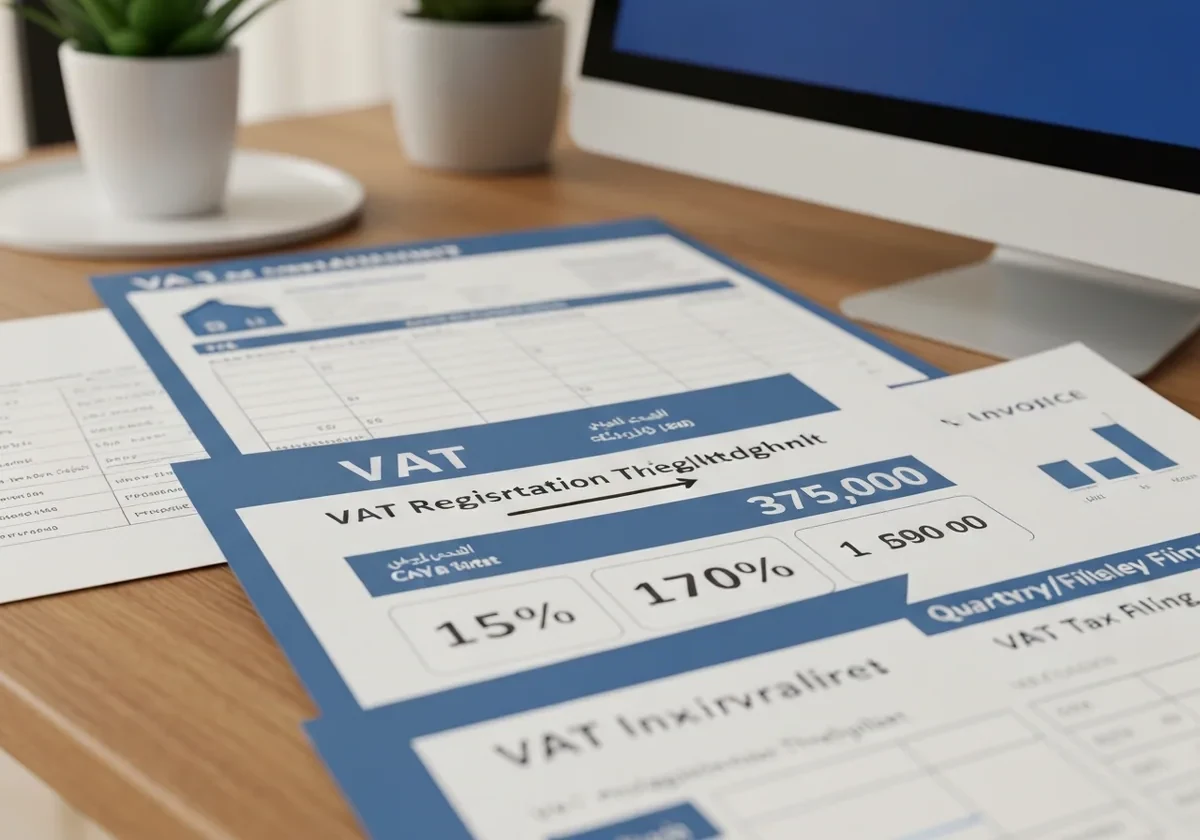
- Businesses with annual taxable supplies above SAR 375,000 must register
- VAT returns are filed monthly or quarterly depending on revenue thresholds
- Input VAT paid on business purchases can be recovered against output VAT
2- Excise Tax (Selective Tax):
- Targets goods deemed harmful to health or the environment
- Tobacco products are taxed at 100% of the retail price
- Energy drinks carry a 100% excise rate; soft drinks are taxed at 50%
- Applies at the point of import or local production, not at point of sale
- The selective goods tax must be registered for separately from VAT
3- Customs Duties and Selective Fees:
- Duties typically range from 0% to 20% depending on the product category
- Some products face higher rates as part of protective trade policy
- Goods entering from other GCC countries may benefit from preferential rates
- Customs valuation is based on CIF (cost, insurance, and freight) value
- Incorrect customs classification is one of the most common compliance errors
Is There Income Tax on Individuals in Saudi Arabia, and What Are the Rates?

Most people are surprised to learn that Saudi Arabia does not impose personal income tax on its citizens or on expatriate employees working in the country. Saudi nationals, as mentioned, are subject to Zakat rather than income tax, and foreign employees pay no income tax on their salaries whatsoever. This is one of the reasons Saudi Arabia remains a highly attractive destination for international talent and investment.
The picture changes when you move to business income. A foreign individual who is a partner or shareholder in a Saudi entity will be subject to corporate income tax at 20% on their share of profits. And if you are a business making payments to foreign contractors or service providers outside the Kingdom, withholding tax obligations kick in immediately. The rates depend heavily on the payment type, so getting professional guidance from a certified accounting office matters a great deal here.
OMK’s team regularly advises clients on exactly these scenarios — helping them calculate the right rates, file on time, and avoid the penalty surcharges that ZATCA imposes on late submissions.
What Are the Rules Around Value Added Tax (VAT) in Saudi Arabia?
- VAT was first introduced in Saudi Arabia on January 1, 2018, at a rate of 5%.
- The rate was raised to 15% in July 2020 as part of fiscal measures following economic pressure.
- Businesses must register for VAT once their taxable supplies exceed SAR 375,000 annually.
- Voluntary registration is allowed for businesses with supplies between SAR 187,500 and SAR 375,000.
- Exempt supplies include certain financial services, residential property rentals, and local passenger transport.
- Zero-rated supplies include exports of goods and services, and international transport.
- VAT invoices must meet strict ZATCA requirements to be valid for input tax recovery.
- Late filing or non-payment results in penalties starting at 5% and rising significantly with time.
Are There Property Taxes or Real Estate Taxes in Saudi Arabia?
Saudi Arabia does not have a traditional property tax in the Western sense, but the real estate sector is far from tax-free. The Real Estate Transaction Tax (RETT) was introduced in 2020 and applies to the sale or transfer of real estate at a rate of 5% of the transaction value. This replaced the previous VAT treatment of real estate transactions, and it caught many property investors off guard when it was first rolled out.
Most people overlook the fact that RETT and VAT can interact in complex ways depending on the nature of the property and the parties involved. Developed commercial property transactions, for instance, may still carry VAT implications even after RETT applies. There is also an annual fee levied on undeveloped urban land owned by individuals or companies — a measure designed to encourage development and address housing supply issues.
For investors and developers, the interaction between types of taxes in Saudi Arabia across real estate is genuinely complex. OMK’s certified accounting office has extensive experience structuring real estate transactions in a way that is fully compliant while minimizing unnecessary tax exposure.
Frequently Asked Questions
What is the difference between direct and indirect taxes in Saudi Arabia?
Direct taxes are charged on income and profits — they fall on the taxpayer without any intermediary. Indirect taxes, by contrast, are embedded in the price of goods and services, so the end consumer ultimately bears the cost. The types of indirect taxes in Saudi Arabia — primarily VAT, excise tax, and customs duties — are collected by businesses on behalf of ZATCA and remitted periodically. Direct taxes like corporate income tax and withholding tax are calculated and filed separately based on financial results.
Who is required to register for VAT in Saudi Arabia?
Any business whose taxable supplies or imports exceed SAR 375,000 in the previous twelve months, or are expected to exceed that threshold in the next thirty days, is legally required to register for VAT with ZATCA. Voluntary registration is available for smaller businesses crossing the SAR 187,500 threshold. Failing to register on time can result in significant financial penalties, so it is worth checking your position early — ideally with a certified accounting office that monitors your revenue thresholds as part of regular accounting services.
How can a certified accounting office help with indirect tax compliance?
Indirect tax compliance is more operationally demanding than most business owners expect. VAT returns need to be filed on time with accurate figures, invoices must meet strict formatting requirements, and the selective goods tax has its own registration and reporting process entirely separate from VAT. A certified accounting office like OMK handles all of this on your behalf — from initial registration to monthly filings, audit support, and ZATCA correspondence. That frees up your team to focus on running the business rather than chasing compliance deadlines.
The Saudi tax system has evolved significantly over the past decade, and businesses that treat it casually are increasingly running into trouble. From VAT and the selective goods tax to customs duties and real estate transaction fees, the types of indirect taxes in Saudi Arabia now touch almost every part of commercial life. Knowing the framework is the first step — but executing compliance accurately, consistently, and on time is a different challenge entirely.
If you want a team that genuinely understands Saudi tax law and can apply it to your specific business situation, reach out to OMK today. Our certified accounting office is ready to help you stay compliant, avoid penalties, and make confident financial decisions.