

Understanding the accounting entries for letters of credit is one of those topics that separates businesses that handle imports smoothly from those that end up with messy books and tax headaches. Every time a company opens a documentary credit, a chain of financial events is triggered and each one needs to be recorded accurately, on time, and in compliance with local regulations.
At OMK, our certified public accounting office works with importers, traders, and businesses of all sizes across Saudi Arabia to get these entries right from day one. Whether you’re dealing with your first letter of credit or managing a high-volume import operation, having a qualified accountant in your corner makes all the difference.
What Is a Letter of Credit?
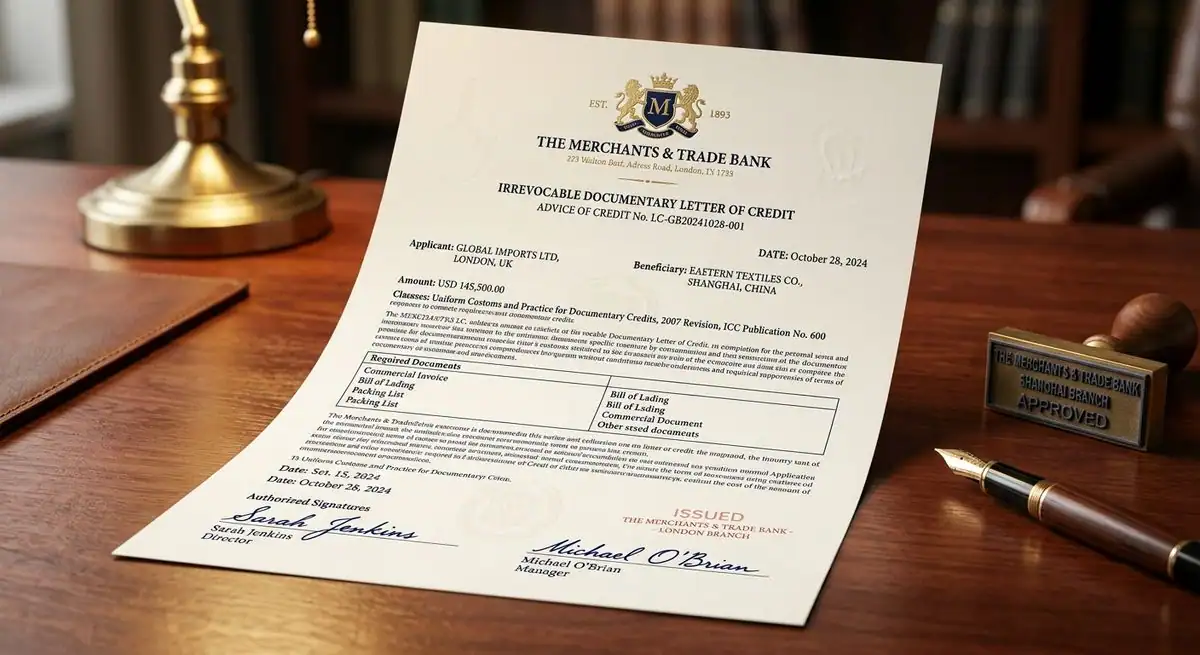
A letter of credit is a formal guarantee issued by a bank on behalf of a buyer, promising to pay a seller a specified amount once certain documentary conditions are met. It’s essentially a trust mechanism the seller ships goods knowing the bank will pay, and the buyer knows payment will only be released once the correct documents are presented. This structure eliminates much of the risk in international trade, especially between parties who have never done business together before.
What’s interesting here is that the letter of credit doesn’t just move money — it moves risk. The issuing bank absorbs the credit risk, the seller gains payment security, and the buyer gains control over the shipping conditions. From an accounting standpoint, this creates obligations and assets that must be tracked at every stage of the process, not just when the goods arrive.
Parties to a Letter of Credit
Before we get into the journal entries, it helps to know exactly who’s involved. A documentary credit transaction typically involves four distinct parties, each with a specific role and a specific set of accounting implications.
Most people overlook how understanding each party’s obligations directly affects how entries are recorded on both sides of the transaction. Getting this wrong is surprisingly common.
1. The Applicant (Importer / Buyer)
- The party who requests the bank to open the letter of credit
- Responsible for providing cash cover or a credit facility to the issuing bank
- Bears the obligation to reimburse the bank once payment is made to the beneficiary
- Must record the frozen cash cover as a separate asset in the books
- The applicant’s accounting entries drive the entire recording process on the buyer’s side
2. The Issuing Bank (Importer’s Bank)
- Issues the letter of credit on behalf of the applicant
- Guarantees payment to the beneficiary upon presentation of compliant documents
- Charges fees and commissions that must be recorded as expenses by the importer
- Holds any cash margin provided by the applicant as collateral
3. The Correspondent Bank (Confirming / Advising Bank)
- Operates in the exporter’s country and advises the beneficiary of the credit
- In a confirmed letter of credit, this bank adds its own payment guarantee
- May negotiate or discount documents on behalf of the seller
- Its confirmation fees are typically borne by the buyer and must be expensed accordingly
4. The Beneficiary (Exporter / Seller)
- The seller who will receive payment once compliant documents are submitted
- Prepares and presents the required shipping documents to the bank
- Records revenue upon shipment or upon receipt of bank payment, depending on accounting policy
- Has no direct accounting entries in the buyer’s books but triggers them through document presentation
Types of Letters of Credit
- Revocable Letter of Credit — can be amended or cancelled by the issuing bank without prior notice to the beneficiary; rarely used today due to the low protection it offers the seller
- Irrevocable Letter of Credit — cannot be modified or cancelled without the agreement of all parties; this is the standard type in modern international trade
- Confirmed Letter of Credit — the correspondent bank adds its own guarantee in addition to the issuing bank’s commitment, offering the seller maximum security
- Unconfirmed Letter of Credit — only the issuing bank guarantees payment; the advising bank simply notifies the beneficiary without adding its own commitment
- At-Sight Letter of Credit — payment is made immediately upon presentation of compliant documents
- Deferred Payment Letter of Credit — payment is made at a future date agreed upon in the credit terms, effectively granting the buyer a credit period
- Transferable Letter of Credit — allows the first beneficiary to transfer part or all of the credit to a second beneficiary, useful in intermediary trade arrangements
Steps to Issue a Letter of Credit
- The buyer and seller agree on trade terms, including price, currency, and shipment conditions
- The buyer submits a formal application to the issuing bank requesting the letter of credit
- The issuing bank reviews the application, assesses credit risk, and requests the required cash margin or collateral
- Once approved, the issuing bank sends the letter of credit to the correspondent bank in the seller’s country
- The correspondent bank advises the beneficiary that the credit has been opened in their favor
- The seller ships the goods and prepares all required documents in line with the credit terms
- Documents are presented to the correspondent bank, which forwards them to the issuing bank
- The issuing bank reviews the documents; if compliant, payment is released to the beneficiary
- The issuing bank debits the buyer’s account and releases the shipping documents
- The buyer uses the documents to clear customs and take delivery of the goods
Required Documents in a Letter of Credit
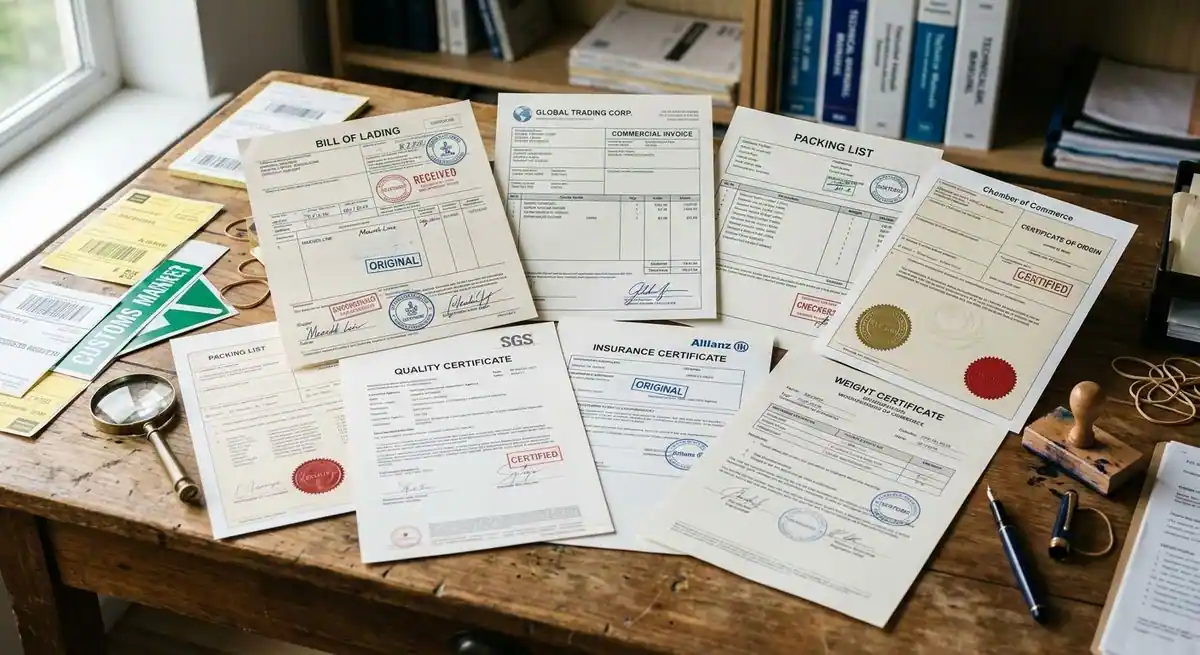
- Commercial invoice issued by the seller
- Bill of lading or airway bill as proof of shipment
- Packing list detailing the contents of each shipment package
- Certificate of origin confirming the country where the goods were produced
- Insurance certificate covering the goods during transit
- Inspection certificate if required by the buyer or the credit terms
- Any other documents specified in the letter of credit, such as health certificates or customs declarations
Accounting Treatment for Letters of Credit
The accounting treatment for a documentary credit unfolds in stages, each corresponding to a real-world event in the transaction. Missing a stage — or recording it at the wrong time — distorts both the balance sheet and the income statement. Here’s the thing: many businesses record everything in one lump entry when the goods arrive, which is completely wrong from both an accounting and a compliance perspective.
Proper recording requires recognizing the cash margin freeze as an asset when the credit is opened, acknowledging the liability when documents are accepted, recording the inventory when goods are received, and expensing bank charges as they occur. This staged approach is what the accounting entries for letters of credit are fundamentally about — matching financial recognition to the actual flow of events.
At OMK’s certified public accounting office, our team builds clean, audit-ready ledgers for each stage of the documentary credit cycle, ensuring nothing falls through the cracks.
1. Upon Opening the Credit (Freezing the Cash Margin)
- Debit: Letter of Credit Margin (Asset Account)
- Credit: Bank Account
- This entry reflects the cash frozen with the bank as collateral for the credit
- The amount is based on the margin percentage required by the bank (often 10%–100% of the credit value)
2. Upon Presentation and Acceptance of Documents
- Debit: Goods in Transit (Asset Account)
- Credit: Letter of Credit Payable (Liability Account)
- This recognizes the obligation to pay the bank and the existence of goods en route
- The letter of credit margin account begins to offset against the payable
3. Upon Arrival and Receipt of Goods
- Debit: Inventory / Purchases Account
- Credit: Goods in Transit
- This closes the transit account and brings the goods onto the company’s books as inventory
- Additional costs such as customs duties and freight may be capitalized here
4. Bank Fees and Commissions
- Debit: Bank Charges / Finance Costs (Expense Account)
- Credit: Bank Account (or Accrued Liabilities if not yet paid)
- These include opening fees, amendment fees, confirmation fees, and any negotiation charges
- All fees must be recorded in the period they are incurred, not deferred
Letters of Credit and VAT in Saudi Arabia
VAT treatment for letters of credit in Saudi Arabia requires careful attention, particularly for businesses importing goods subject to the standard 15% rate. When goods are imported through a documentary credit, VAT is typically assessed at the customs entry point meaning the importer pays VAT upon clearance, not upon payment to the supplier. This distinction matters because it affects both the timing of VAT recovery and the accounting period in which the input tax credit is claimed.
In practice, the VAT paid at customs should be recorded as input VAT recoverable in the same period as the customs clearance, provided the goods are used for taxable supplies. OMK’s certified public accounting office advises clients to keep the customs clearance documentation linked directly to the letter of credit file, creating a clean audit trail that satisfies both ZATCA requirements and internal controls.
Some businesses mistakenly defer the VAT recording until the invoice is matched or the goods are sold — this creates unnecessary risk during a ZATCA audit. Getting the VAT timing right is just as important as getting the journal entries right.
Practical Tips When Dealing with Letters of Credit
- Always open a dedicated sub-ledger for each letter of credit to track the full financial history from margin to settlement
- Reconcile the letter of credit balance with the bank’s statement at every stage, not just at year end
- Ensure that goods-in-transit accounts are cleared promptly when goods arrive — aging balances here are a red flag for auditors
- Keep all original documents (bill of lading, commercial invoice, customs declaration) in a single file linked to the accounting record
- Record bank commissions as expenses in the period they are charged, and never capitalize them unless directly attributable to bringing the inventory to its current condition
- Work with a certified accountant who understands both the banking mechanics and the accounting standards the two are more intertwined than most people realize
Accounting Entries for Letters of Credit
- Entry 1: Opening the credit: Debit Letter of Credit Margin / Credit Bank Account
- Entry 2: Document acceptance: Debit Goods in Transit / Credit Letter of Credit Payable
- Entry 3: Offsetting the margin: Debit Letter of Credit Payable / Credit Letter of Credit Margin
- Entry 4: Goods receipt: Debit Inventory (Purchases) / Credit Goods in Transit
- Entry 5: Customs duties: Debit Inventory (or Customs Duty Expense) / Credit Cash or Bank
- Entry 6: VAT at customs: Debit Input VAT Recoverable / Credit Bank Account
- Entry 7: Bank fees: Debit Bank Charges Expense / Credit Bank Account
- Entry 8 :Final settlement: Debit Letter of Credit Payable / Credit Bank Account (remaining balance)
Frequently Asked Questions
What is the difference between a confirmed and unconfirmed letter of credit?
In a confirmed letter of credit, the correspondent bank in the seller’s country adds its own independent guarantee of payment on top of the issuing bank’s commitment. This gives the seller maximum protection, especially when dealing with banks in less familiar markets. An unconfirmed letter of credit, by contrast, means the correspondent bank simply notifies the beneficiary without taking on any payment obligation of its own — the seller is relying solely on the issuing bank’s promise. From an accounting perspective, the confirmation fee in a confirmed credit is an additional expense that must be recorded separately.
How are bank fees for letters of credit recorded in the accounts?
Bank fees — including opening commissions, amendment fees, and negotiation charges — should be recorded as financial or administrative expenses in the period they are incurred. They are debited to a bank charges or finance cost account and credited to the bank or to accrued liabilities if not yet settled. Some fees that are directly attributable to the cost of acquiring inventory may be capitalized under certain accounting standards, but this is the exception rather than the rule. OMK’s certified public accounting office helps clients determine the correct treatment based on their specific circumstances and the applicable standards.
Does VAT apply to letters of credit in Saudi Arabia?
VAT does not apply to the letter of credit instrument itself, but it does apply to the goods being imported through it. When those goods enter Saudi Arabia, VAT at 15% is assessed at the customs point, and the importer must pay it before the goods are released. This input VAT is generally recoverable against the company’s output VAT obligations, provided the goods are used in taxable business activities. The accounting entries for letters of credit in a Saudi context must therefore include a dedicated entry for this import VAT to ensure timely and accurate filing with ZATCA.
The accounting entries for letters of credit are not just a technical formality — they are the financial backbone of every import transaction you run. Getting them right protects your balance sheet, keeps your VAT position clean, and ensures you’re audit-ready at any point in the year. Sloppy entries create cascading problems: misstated inventory, unreconciled bank accounts, and VAT timing errors that can trigger penalties. The good news is that with the right guidance, the entire process becomes systematic and manageable.
OMK’s certified public accounting office has the expertise to set up your letter of credit accounting from scratch or to clean up an existing system that’s gotten out of hand. Contact OMK today and let our team take the complexity off your plate — so you can focus on growing your business while we make sure the numbers tell the right story.