A VAT refund is one of the most financially valuable mechanisms available to businesses operating under the Kingdom’s tax framework — yet it remains one of the most misunderstood. Many companies overpay simply because they don’t know they’re entitled to reclaim a portion of what they’ve already submitted. Getting this process right starts with understanding exactly how a VAT refund works and what triggers eligibility in the first place.
At OMK, a certified accounting office with deep experience in Saudi tax compliance, our team works directly with businesses to identify refund opportunities, prepare airtight documentation, and manage the entire submission process. Whether you’re a growing SME or an established enterprise, having a qualified accounting office in your corner makes the difference between leaving money on the table and recovering every riyal you’re owed.
What Is a VAT Refund?
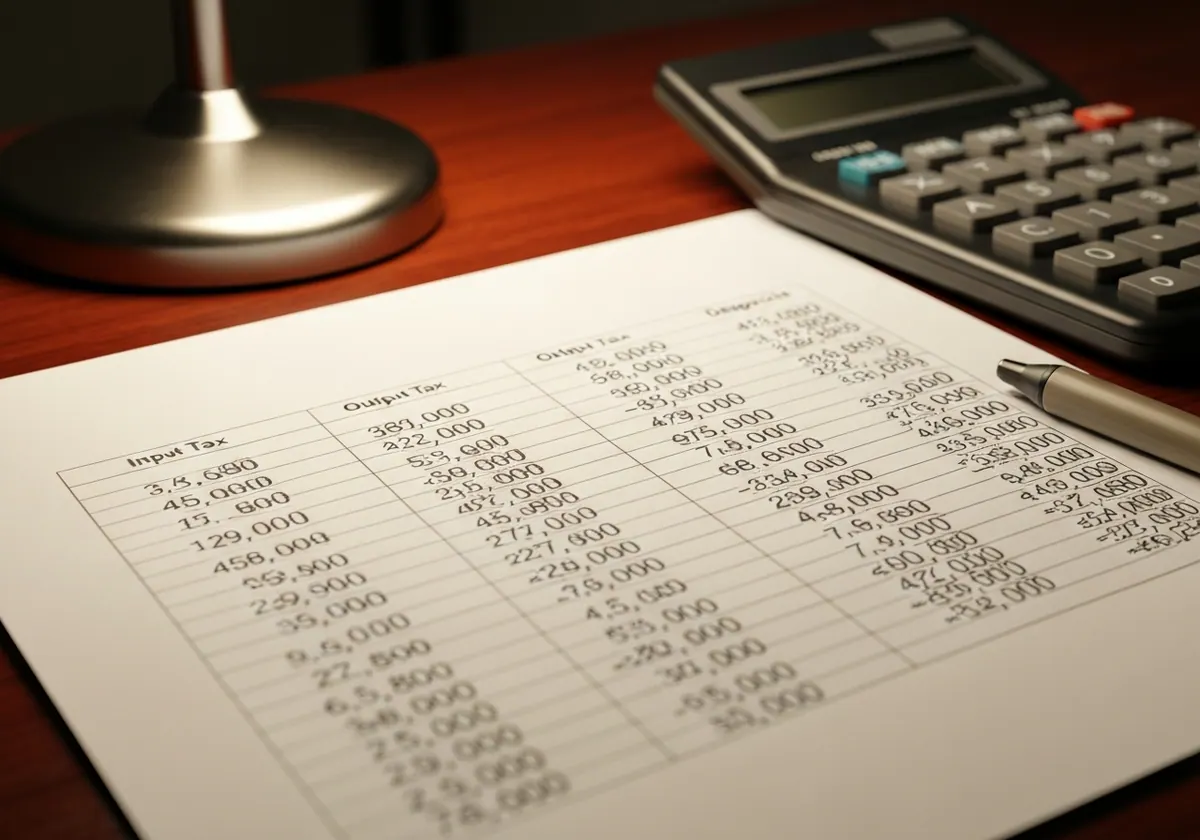
A VAT refund — or tax recovery — is the process by which a registered business claims back the value-added tax it paid on its inputs when that amount exceeds the tax it collected from customers during a given period. This typically happens when a company’s deductible input tax is higher than its output tax liability, creating what’s known as a tax credit position. Rather than losing that excess amount, the business has a legal right to request it back from the Zakat, Tax and Customs Authority (ZATCA).
What’s interesting here is that most businesses don’t fall into this situation accidentally. Industries with significant capital expenditures — construction, manufacturing, real estate — frequently find themselves in a recurring credit position simply because of the volume of VAT they absorb on purchases and infrastructure investments. Understanding this dynamic is the first step toward treating tax recovery not as a one-off event, but as an active financial strategy.
The mechanism itself is straightforward in principle: you file a return showing more input tax than output tax, and ZATCA issues a refund or applies the credit against future liabilities. In practice, however, the paperwork, eligibility conditions, and filing accuracy requirements make professional guidance not just helpful but essential.
Cases Where a VAT Refund Applies
Not every business qualifies automatically — specific circumstances trigger the right to claim. Here are the most common scenarios:
- The business’s total input VAT paid during a tax period exceeds its total output VAT collected from clients, resulting in a net credit balance.
- A company is engaged in zero-rated supplies — such as exports or certain financial services — where no output tax is charged but input tax is still incurred on related costs.
- Real estate VAT recovery applies when a developer or property investor purchases land or buildings for taxable commercial purposes and reclaims the VAT paid on those acquisitions.
- A newly registered business incurs pre-registration VAT on startup costs before it begins making taxable supplies.
- Businesses that cease trading entirely and deregister from VAT may apply for a final refund on any outstanding credit balance.
- Foreign businesses with no permanent establishment in Saudi Arabia may also qualify under specific reciprocal arrangements recognized by ZATCA.
Why VAT Refund Matters for Businesses
Here’s the thing — cash flow is the lifeblood of any business, and unrecovered VAT is effectively an interest-free loan you’ve given to the government that you may never see again unless you actively claim it. For businesses with thin margins or heavy capital expenditure cycles, missing a VAT refund claim can mean the difference between healthy working capital and unnecessary liquidity pressure.
Beyond the immediate cash impact, consistently managing your tax recovery position signals financial discipline to banks, investors, and partners. A well-maintained VAT filing record — one that accurately reflects your credit positions and refund claims — strengthens your overall tax compliance profile. ZATCA views businesses that proactively and correctly manage their positions more favorably during audits.
For large-scale operations, particularly in construction and real estate, real estate VAT recovery can represent hundreds of thousands of riyals annually. These aren’t marginal sums. They’re strategic financial assets that belong to your business, and recovering them should be treated with the same priority as any other revenue line.
Conditions for a VAT Refund in Saudi Arabia
Before submitting a claim, your business must meet certain requirements set by ZATCA. The key eligibility conditions include:
- The business must be registered for VAT with ZATCA and hold a valid tax registration number.
- All VAT returns for prior tax periods must be filed — there can be no missing or overdue submissions.
- The claimed refund must be supported by valid tax invoices that meet ZATCA’s formatting and content requirements.
- The excess credit must appear clearly in the filed return, with the refund request submitted within the applicable deadline.
- The business must not have any outstanding tax debts or penalties that ZATCA may offset against the refund amount.
- For real estate VAT recovery, the property must be used for taxable business purposes — residential use or personal investment does not qualify.
- In the case of zero-rated supplies, the business must provide evidence that the supplies genuinely qualify for zero-rating under Saudi VAT regulations.
Key Documents Required for a VAT Refund Claim
Documentation is where many applications fail. Submitting incomplete or incorrectly formatted records is one of the fastest ways to get a refund rejected. The following documents are typically required:
- A completed VAT refund application submitted through the ZATCA online portal.
- Copies of all tax invoices related to the input tax being claimed — these must include supplier name, VAT number, invoice date, and itemized tax amounts.
- Filed VAT returns for the relevant tax period showing the credit balance.
- Bank account details verified and matching the registered business account on file with ZATCA.
- Commercial registration (CR) documents confirming the business is legally active.
- Any contracts or agreements supporting large-value purchases — particularly relevant for real estate VAT recovery claims.
- Export documentation (shipping records, customs declarations) where zero-rated export supplies are involved.
- A letter of authorization if the application is being filed through a third party — such as OMK’s certified accounting office team.
Steps to Apply for a VAT Refund as a Business
Following the correct process from the start saves time and prevents rejection. Here’s how the application process works:
- Verify that all VAT returns for the relevant periods are filed and up to date before initiating a refund request.
- Log in to the ZATCA taxpayer portal and navigate to the VAT refund request section within your account dashboard.
- Complete the refund application form accurately, ensuring the credit amount matches what is reflected in your filed returns.
- Attach all supporting documentation in the required formats — scanned invoices, contracts, export documents, and bank details.
- Submit the application and retain the reference number issued by the portal as confirmation of receipt.
- Monitor the application status through the portal and respond promptly to any ZATCA requests for additional clarification or documentation.
- Once approved, the refund is transferred directly to the registered bank account — or applied as a credit against upcoming liabilities, depending on your preference.
How to Claim a VAT Refund Electronically

Saudi Arabia’s ZATCA has made the electronic submission process relatively accessible, though it rewards those who prepare thoroughly before logging in.
- Access the ZATCA portal at zatca.gov.sa and sign in using your registered credentials.
- Navigate to the “VAT” section and select “Refund Request” from the available options within your account.
- Select the tax period for which you’re claiming the refund and confirm the credit balance shown matches your filed return.
- Upload all required supporting documents in the accepted file formats (PDF or Excel where applicable).
- Double-check all entered figures against your original invoices and returns — errors at this stage delay processing significantly.
- Submit the form and save the confirmation page or email for your records.
- Track the application status regularly and ensure your registered contact details are current so ZATCA can reach you with updates.
Reasons a VAT Refund Application May Be Rejected
Understanding what causes rejections helps you avoid costly delays and resubmissions.
- Missing or incomplete supporting invoices that don’t meet ZATCA’s tax invoice standards.
- Discrepancies between the refund amount claimed and the credit balance shown in the filed return.
- Outstanding VAT returns from prior periods that haven’t been submitted.
- Unpaid tax liabilities or penalties that ZATCA offsets against the refund amount.
- Bank account details that don’t match the business’s registered information with ZATCA.
- Insufficient evidence for zero-rated supplies — particularly missing export documentation.
- Applications submitted outside the permissible refund window after the relevant tax period.
- Real estate VAT recovery claims lacking adequate proof that the property is used for taxable commercial activity.
VAT Refund Without a Tax Registration Number in Saudi Arabia
This is a question that comes up more often than you might expect. The short answer is that businesses without a tax registration number cannot file a standard VAT refund claim through ZATCA’s regular refund process — because registration is a prerequisite for the entire VAT system.
That said, there are limited circumstances where non-registered entities or foreign businesses without a Saudi VAT number can explore refund options. Foreign businesses that have incurred VAT on expenses within the Kingdom may be eligible under specific bilateral or international arrangements. These cases are complex and highly specific — they require a case-by-case assessment rather than a standard submission.
If your business is not yet registered but believes it qualifies for refund claims on historical input tax, the right move is to speak with a certified accounting office like OMK first. Our team can assess whether retroactive registration or an alternative recovery route is viable in your specific situation — before you spend time pursuing an application that ZATCA will reject outright.
Frequently Asked Questions
Who is eligible to apply for a VAT refund in Saudi Arabia?
Any VAT-registered business that has paid more input tax than it collected in output tax during a given tax period is potentially eligible. This includes companies making zero-rated supplies, businesses with significant capital expenditure, and those involved in real estate VAT recovery on commercial property purchases. Eligibility also depends on having all prior VAT returns filed and no outstanding tax debts with ZATCA.
How long does it take to receive a VAT refund after submitting an application?
ZATCA typically processes VAT refund claims within 20 business days of receiving a complete and accurate application. However, if the authority requires additional documentation or initiates a verification review, the timeline can extend significantly. Submitting a clean, fully documented application from the start — something OMK specializes in as a certified accounting office — is the single best way to avoid delays.
Can a business recover VAT without a registered tax number?
Generally, no. Standard VAT refund claims through ZATCA require a valid tax registration number. However, certain foreign entities or businesses exploring VAT refund claims under specific international frameworks may have alternative options. This is a nuanced area where professional advice is critical — OMK’s accounting team can evaluate your situation and advise on the most viable path forward, including whether registration or another recovery route applies.
Recovering what your business is legitimately owed shouldn’t be complicated — but without the right knowledge and preparation, it often becomes exactly that. A properly filed VAT refund claim can unlock significant working capital, strengthen your compliance record, and give your business the financial breathing room it deserves. Don’t leave your tax recovery to chance or incomplete filings. Contact OMK today and let our certified accounting office team handle every aspect of your claim — from eligibility assessment to final approval — so you can focus on running your business while we secure your refund.