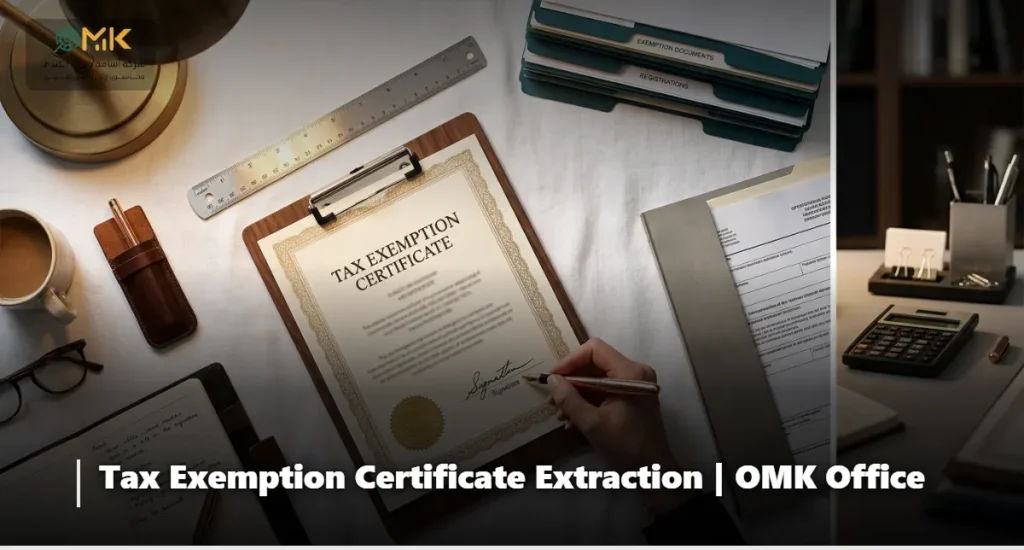
Obtaining a tax exemption certificate is one of the most strategically important steps any business operating in Saudi Arabia can take — and yet it is consistently misunderstood, delayed, or skipped entirely. The process of tax exemption certificate extraction is not just paperwork; it is formal recognition by the government that your establishment meets the criteria to operate with reduced or eliminated tax obligations. Getting this right from day one protects your business and opens doors to opportunities that simply would not be available otherwise.
At OMK, our certified accounting office has guided dozens of businesses through this exact process — from small startups to established enterprises wondering why nobody told them about this sooner. We know which documents get flagged, which steps get skipped, and what the real bottlenecks are. If you are serious about structuring your business properly, you are in the right place.
What Is the Tax Exemption Certificate for Establishments in Saudi Arabia
A tax exemption certificate is an official document issued by the Zakat, Tax and Customs Authority (ZATCA) in Saudi Arabia. It formally certifies that a specific establishment qualifies for exemption from certain tax obligations — most commonly value-added tax or zakat contributions — based on the nature, size, or activity of the business. This is not a workaround or a loophole; it is a legitimate mechanism built into the Saudi tax framework to support particular categories of businesses.
What is interesting here is how many business owners confuse this certificate with simply not paying taxes out of neglect. There is a world of difference between an unregistered business ignoring tax obligations and a legally recognized establishment holding a verified tax exemption certificate. The former carries serious legal risk. The latter carries legal protection, credibility, and a clear record that the authority acknowledges your exemption status.
The certificate typically needs to be renewed periodically and must reflect accurate, up-to-date information about the establishment. Any changes in business activity, ownership, or revenue thresholds can affect eligibility — which is exactly why working with a professional accounting office like OMK is not just convenient, it is genuinely necessary.
Learn about : The VAT Accounting Entry
The Goals of the Tax Exemption Certificate
Beyond the obvious financial relief, the tax exemption certificate serves several deeper strategic goals within Saudi Arabia’s economic framework. It is designed to encourage legitimate business formation, reduce barriers for smaller establishments, and align private sector growth with Vision 2030 targets. Understanding these goals helps businesses appreciate why the government takes the certification process seriously and why incomplete or inaccurate applications get rejected.
The goals break down into three core areas:
Reducing Financial Pressure
- Removing recurring tax burdens from businesses that qualify under defined revenue thresholds
- Freeing up cash flow that would otherwise go toward tax payments, allowing reinvestment in operations
- Reducing the administrative cost of frequent tax filings for establishments with low or exempt activity
- Providing small businesses with breathing room during their early growth phases
- Giving seasonal or project-based businesses a fair framework that reflects their actual income patterns
Supporting Expansion and Growth
- Enabling exempt businesses to offer more competitive pricing since they are not passing tax costs to customers
- Creating a cleaner financial profile that is attractive to investors and financing institutions
- Allowing businesses to allocate saved funds toward hiring, equipment, or market expansion
- Strengthening the establishment’s official standing, which matters when bidding on government contracts
Empowering Entrepreneurs
- Lowering the financial barrier for first-time entrepreneurs launching their first registered business
- Encouraging formal registration rather than informal operation, which benefits the broader economy
- Providing a clear legal identity that makes partnerships and collaborations significantly easier to establish
- Building a trackable compliance record that simplifies future dealings with ZATCA
Learn about : How to Open a Tax Account for Individuals
The Difference Between Tax Exemption and Tax Registration
These two concepts get mixed up constantly, and the confusion causes real problems. Tax registration and tax exemption are related but fundamentally different, and conflating them leads businesses to either skip registration entirely or assume that registration automatically grants exemption. Neither is true.
Here is the thing: every business that meets a certain revenue threshold must register for VAT — no exceptions. Tax exemption, on the other hand, is a separate status that applies after registration is considered and either waived or processed differently based on your establishment’s profile. The two processes involve different forms, different criteria, and different outcomes.
Tax Registration
- Required for businesses whose taxable supplies exceed SAR 375,000 annually
- Involves obtaining a VAT registration number from ZATCA
- Obligates the business to collect VAT from customers and remit it to the authority
- Requires periodic VAT return filings — monthly or quarterly depending on turnover
- Non-compliance carries financial penalties and potential legal action
Tax Exemption
- Available to businesses that fall below the mandatory registration threshold or operate in exempt activity categories
- Does not require the business to charge VAT on its sales
- Still requires formal documentation — the establishment cannot simply assume it qualifies
- May apply to specific sectors such as certain financial services, residential real estate transactions, and select health or education services
- Must be officially documented through a zakat and income certificate or a specific tax exemption certificate from ZATCA
Learn about: Withholding Tax Rate in Saudi Arabia
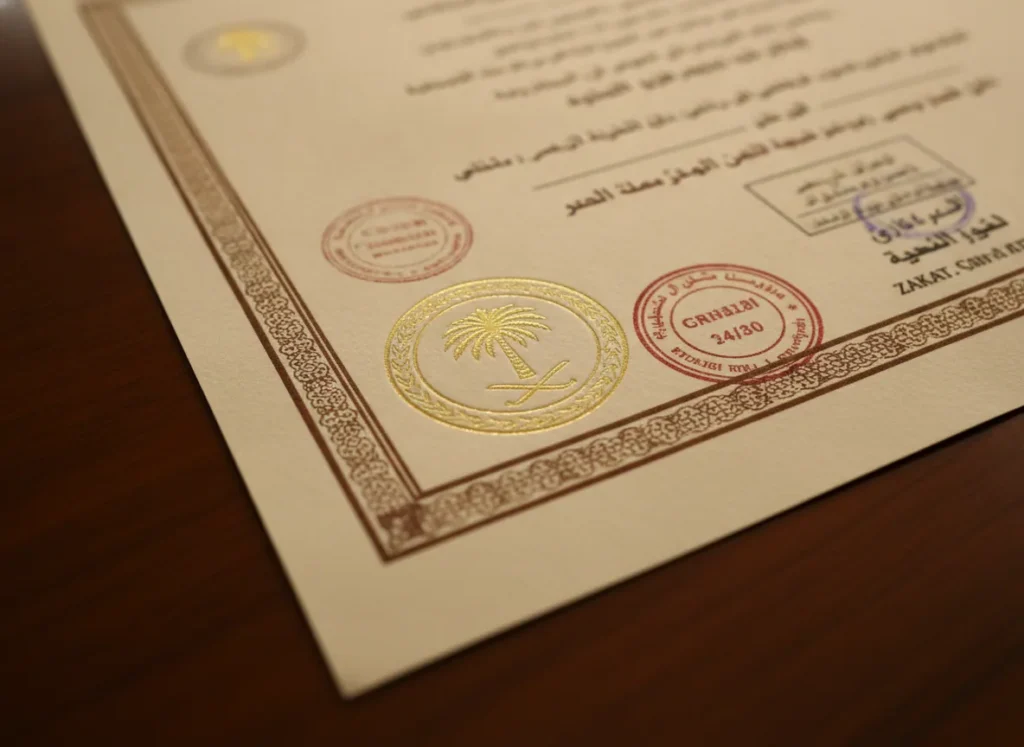
The Official Authority Responsible for Issuing the Tax Exemption Certificate
In Saudi Arabia, the Zakat, Tax and Customs Authority — commonly known as ZATCA — is the sole government body authorized to issue the tax exemption certificate. There is no alternative channel, no shortcut through a municipality or chamber of commerce, and no way to self-certify. The certificate is only valid when it comes directly from ZATCA, and any document purporting to grant tax exemption status from another source is legally meaningless.
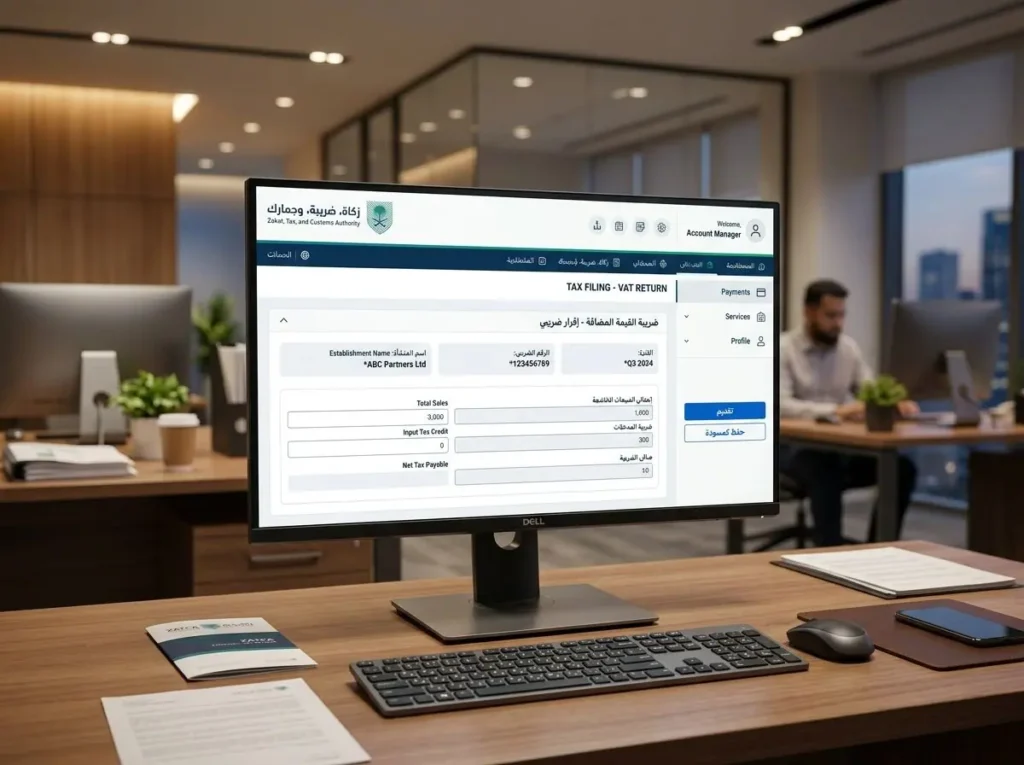
ZATCA operates a digital portal where businesses can apply, track applications, and receive issued certificates electronically. The authority also handles appeals in cases where an exemption request is denied, and it maintains a register of all certified establishments. Working with OMK’s certified accounting office means you have professionals who interact with this authority regularly and understand exactly how to position your application for approval.
Most people overlook the importance of how an application is framed. ZATCA reviewers assess not just whether your numbers qualify but whether your documentation is internally consistent and whether the business activity descriptions match your commercial registration. A mismatch anywhere in that picture is enough to delay or deny the certificate.
The Importance of Tax Exemption Certificate Extraction for Establishments
- Establishes your business as legally compliant with Saudi tax law, even when exempt
- Protects you from audits and penalties that target unregistered or uncertified businesses
- Strengthens your credibility with banks, investors, and government procurement committees
- Enables you to obtain a zakat and income certificate when required for tenders or contracts
- Simplifies annual financial reporting by providing an official reference document
- Supports smooth renewal of commercial licenses, since many municipal authorities cross-reference tax status
- Creates a clean paper trail that proves your exemption is legitimate if ever questioned
- Positions your establishment for a smooth transition to full tax registration when your revenue grows past the threshold
Conditions and Requirements for Obtaining a Tax Exemption Certificate
- The establishment must be officially registered with the Ministry of Commerce and hold a valid commercial registration (CR) number.
- Annual taxable supplies must fall below the mandatory VAT registration threshold of SAR 375,000, or the business activity must fall within a ZATCA-recognized exempt category.
- The business owner or authorized representative must have an active Absher account and be enrolled in the ZATCA digital portal.
- All previously filed tax returns — if any — must be up to date with no outstanding liabilities.
- The commercial registration activity codes must accurately reflect the actual nature of the business operations.
- A valid national ID or Iqama for the owner, along with supporting documents for any authorized representatives acting on behalf of the establishment.
- A bank account registered under the business name may be required depending on the establishment type and exemption category.
- If the business has employees, their details and payroll records may be requested as part of the verification process.
Learn about : What Is a Tax Identification Number?
Steps for Tax Exemption Certificate Extraction Electronically
- Log in to the ZATCA official portal using your Absher-linked credentials
- Navigate to the tax services section and select the exemption certificate application
- Enter your commercial registration number and verify the auto-populated business details for accuracy
- Upload all required supporting documents including CR copy, owner ID, and any activity-specific documentation
- Review the application summary carefully before submission — errors here cause processing delays
- Submit the application and note the reference number provided for tracking purposes
- Monitor your application status through the portal dashboard; ZATCA typically responds within a defined processing window
- Upon approval, download the official tax exemption certificate from the portal and store a certified copy for your records
Practical Uses of the Tax Exemption Certificate
- Submitting government or semi-government tender bids that require proof of tax compliance or exemption status.
- Opening corporate bank accounts, where financial institutions require a zakat and income certificate or equivalent tax document as part of their due diligence.
- Entering into contracts with large private sector companies that conduct supplier verification before onboarding new vendors.
- Applying for government-backed financing programs or SME support funds that require a clean tax record.
- Renewing or upgrading your commercial registration, where some license categories require tax certificate verification.
- Establishing credibility with foreign partners or investors who need assurance that your business operates within a recognized legal and fiscal framework.
- Providing documentation during labor inspections or regulatory audits that review the establishment’s overall compliance profile.
OMK’s certified accounting office exists precisely to eliminate that uncertainty for you. Our team knows this process inside out, and we take full ownership of your application from start to finish. Contact OMK today and let’s get your tax exemption certificate secured — quickly, correctly, and without the headaches of doing it alone.
reach out to OMK’s certified public accounting office today. The team brings the expertise to make your numbers work for you, not against you.
Frequently Asked Questions
How Long Does It Take to Obtain a Tax Exemption Certificate in Saudi Arabia?
The processing time through the ZATCA portal typically ranges from a few business days to two or three weeks, depending on the completeness of your application and the current volume of submissions the authority is handling. Applications that are submitted with all required documents in order and with no discrepancies in the business details tend to move significantly faster. Delays almost always trace back to missing files, mismatched information between the CR and the application form, or outstanding compliance issues that need to be resolved first. OMK’s certified accounting office reviews every application thoroughly before submission to minimize these delays.
What Is the Difference Between a Zakat and Income Certificate and a Tax Exemption Certificate?
These are two distinct documents that serve different purposes. The zakat and income certificate is issued to confirm that a business is registered and compliant with ZATCA’s zakat or income tax obligations — it is essentially a compliance clearance certificate. A tax exemption certificate, by contrast, specifically states that the establishment is exempt from certain tax obligations based on its activity or revenue level.
Can OMK Handle the Tax Exemption Certificate Extraction Process on My Behalf?
Absolutely — and this is one of the most common services we provide at OMK. Our certified accounting office is authorized to act as a representative for businesses throughout the entire application process, from preparing and reviewing documents to submitting the application and following up with ZATCA on your behalf. The tax exemption process has nuances that trip up business owners who attempt it without professional guidance, and the cost of a rejected or delayed application is almost always higher than the cost of getting expert help from the start. Reach out to OMK and let us handle it correctly the first time.
The tax exemption certificate extraction process is not something you want to approach casually or leave until a contract deadline forces your hand. Every day your establishment operates without this document is a day you are either exposed to compliance risk or missing out on business opportunities that require it. The process is manageable — but it has to be done properly, with accurate documentation and a clear understanding of ZATCA’s requirements.