

For any business that takes itself seriously, annual financial reports are not optional paperwork they are the clearest picture a company can offer of its true financial health. Whether you are presenting to investors, satisfying regulatory requirements, or simply trying to understand where your money went, the quality of these reports shapes decisions that ripple through the entire organization.
At OMK, a trusted certified accounting office with deep experience across Saudi markets, we have seen firsthand how poorly prepared reports can derail financing applications, invite regulatory scrutiny, and erode stakeholder confidence. The good news is that getting them right is entirely achievable with the right team behind you.
What Is an Annual Financial Report?
An annual financial report is a comprehensive document that captures the complete financial activity of a business over a twelve-month period. It goes well beyond a simple income statement it consolidates data from multiple financial statements, adds explanatory notes, and presents the full picture in a structured, auditable format that external and internal stakeholders can rely on. Think of it as the definitive account of everything that happened financially within your organization during the year.
What’s interesting here is that many business owners confuse a financial report with a summary spreadsheet. They are not the same thing. A properly prepared financial report includes narrative context, accounting policy disclosures, comparative data from the prior year, and in many cases an independent auditor’s opinion. That depth is what gives the document its credibility and legal standing.
What Are the Types of Financial Reports?
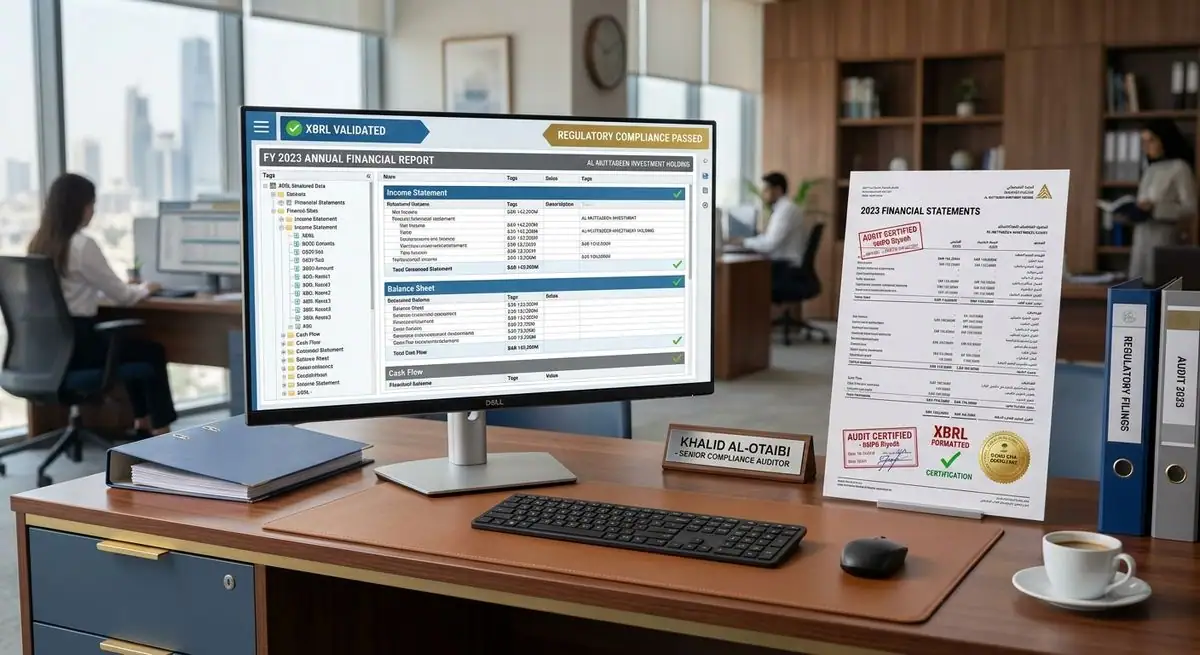
- Income Statement (Profit and Loss Report) — Shows revenues, costs, and net profit or loss over the reporting period. This is often the first document stakeholders look at.
- Balance Sheet Presents the company’s assets, liabilities, and equity at a specific point in time, giving a snapshot of financial position.
- Cash Flow Statement Tracks the actual movement of cash in and out of the business, broken down into operating, investing, and financing activities.
- Statement of Changes in Equity — Documents shifts in the owners’ equity section across the period, including retained earnings and capital contributions.
- Notes to the Financial Statements — Provides the essential context behind the numbers: accounting policies, contingent liabilities, related-party transactions, and more.
- Management Discussion and Analysis (MD&A) — Offers a narrative explanation from leadership about performance, risks, and strategic outlook.
- Auditor’s Report — An independent opinion on whether the financial statements present a true and fair view in accordance with applicable accounting standards.
Why Do Annual Financial Reports Matter for Companies?
- They serve as the primary tool for investor relations — no serious investor will commit capital without reviewing audited financial reports that demonstrate transparency and accountability.
- Regulatory compliance in Saudi Arabia, including requirements set by the Capital Market Authority and Zakat, Tax and Customs Authority, depends on the timely and accurate submission of a proper annual report.
- Banks and lending institutions base credit decisions heavily on the financial report submitted with loan applications — a weak or incomplete report will almost certainly result in unfavorable terms or outright rejection.
- Internal management relies on annual financial reports to identify cost inefficiencies, measure departmental performance, and set realistic budgets for the year ahead.
- Mergers, acquisitions, and partnership negotiations all begin with a thorough review of the target company’s financial statements — having clean, well-prepared reports accelerates these processes significantly.
- Building long-term credibility with customers, suppliers, and strategic partners is made easier when your company can demonstrate financial transparency backed by a certified accounting office.
What Do Annual Financial Reports Contain?
- Cover page and table of contents Professional presentation that identifies the company, the reporting period, and the reporting currency.
- Auditor’s independent report The cornerstone of external credibility, confirming compliance with IFRS or SOCPA standards as applicable.
- Balance sheet A structured listing of all assets, liabilities, and equity balances as of the period-end date.
- Income statement Detailed breakdown of revenue streams, cost of goods sold, gross profit, operating expenses, and net income.
- Cash flow statement Essential for understanding liquidity, often more revealing than net profit figures alone.
- Statement of equity changes Tracks how ownership interests and retained earnings shifted during the year.
- Accounting policy notes Explains the standards and judgments applied when preparing the figures.
- Supporting schedules and disclosures Includes fixed asset registers, receivables aging, related-party details, and contingent liabilities.
How to Design an Annual Financial Report for Companies in Saudi Arabia

- Choose the applicable accounting framework Saudi companies typically follow IFRS as adopted by SOCPA, so the first step is confirming which standards apply to your entity type and size.
- Gather and reconcile all source data Pull trial balances, bank statements, payroll records, fixed asset registers, and VAT filings before any drafting begins.
- Engage a certified accounting office early Firms like OMK bring audit-readiness checks, technical accounting expertise, and knowledge of Saudi regulatory timelines that in-house teams often lack.
- Prepare draft financial statements Build each statement methodically, cross-referencing figures between documents to ensure internal consistency.
- Write the notes and disclosures This step is where most companies stumble; clear, complete notes are non-negotiable for a compliant annual financial report.
- Coordinate with your external auditor Submit draft documents early to allow time for queries, adjustments, and the issuance of a clean audit opinion.
- Submit to relevant authorities File with ZATCA, the Ministry of Commerce, and for listed entities the Capital Market Authority, all within required deadlines.
What Is the Difference Between Financial Statements and Financial Reports?
- Scope — Financial statements are specific documents (balance sheet, income statement, etc.), while a financial report is the broader package that includes those statements plus notes, disclosures, auditor opinion, and management commentary.
- Purpose — Statements present the numbers; reports provide the context, analysis, and assurance that make those numbers meaningful and trustworthy.
- Audience — Financial statements are primarily technical; financial reports are designed to communicate with a wider audience including investors, regulators, and lenders.
- Legal standing — A full annual financial report, once audited and signed off by a certified accounting office, carries formal legal weight that a standalone statement does not.
- Frequency — Financial statements can be prepared monthly or quarterly for internal use; annual financial reports follow a formal yearly cycle tied to regulatory submission deadlines.
How Is a Financial Report Prepared?
Preparing a financial report is a disciplined process that moves through several distinct phases. It starts with data collection — pulling together every financial transaction from the accounting system, reconciling bank accounts, confirming inventory counts, and verifying payroll records. Nothing gets drafted until the underlying numbers are clean and agreed upon. Here’s the thing: skipping this reconciliation phase is the single biggest reason financial reports end up with material errors.
Once the data is solid, the preparation moves into structuring. Each statement is built in sequence, beginning with the trial balance and flowing through to the income statement, balance sheet, cash flow, and equity statement. The notes are written in parallel because they require constant cross-referencing with the statements themselves. A qualified team at a certified accounting office like OMK works through this phase systematically, applying current IFRS or SOCPA requirements to every line.
The final phase involves internal review, external audit coordination, and submission. The draft report is reviewed for completeness and consistency before being handed to auditors. Any adjustments flagged during the audit are resolved, the auditor issues their opinion, and the completed annual financial report is prepared for regulatory filing and stakeholder distribution.
What Are the Characteristics of Financial Reports?
- Relevance — The information must be capable of influencing the decisions of users; irrelevant data adds confusion, not clarity.
- Reliability — Figures must be free from material error and represent faithfully what they claim to represent.
- Comparability — Reports should allow readers to compare performance across periods and against industry peers, which requires consistent application of accounting policies.
- Understandability — Complex financial data must be presented clearly enough for an informed reader to grasp without specialist training.
- Timeliness — A financial report delivered six months after the period ends has limited usefulness; timely reporting is a hallmark of professional management.
- Completeness — All material information must be disclosed; selective omission is not only misleading but can constitute a regulatory violation.
Why Does the Annual Report Matter for the Capital Market Authority in Saudi Arabia?

- Mandatory disclosure for listed companies — The Capital Market Authority requires all publicly listed Saudi companies to publish audited annual reports within specified deadlines; non-compliance carries significant financial and reputational penalties.
- Investor protection — The CMA’s entire regulatory framework is built on the principle that investors deserve accurate, timely financial information — and the annual report is the primary vehicle for delivering it.
- Market integrity — When all listed firms publish consistent, high-quality annual reports, it levels the information playing field and contributes to a more efficient, trustworthy capital market.
- Continuous listing requirements — Companies that fail to meet annual report standards risk suspension or delisting, which has severe consequences for shareholders and management alike.
- Governance signaling — The quality and depth of an annual report signals board-level governance maturity to institutional investors, analysts, and regulators who evaluate the company’s long-term credibility.
Frequently Asked Questions
Who Is Legally Required to Prepare Annual Financial Reports in Saudi Arabia?
All registered commercial entities in Saudi Arabia — including joint stock companies, limited liability companies, and partnerships — are required by law to maintain proper accounting records and prepare annual financial reports. Listed companies face additional obligations under Capital Market Authority regulations, which mandate external audit and public disclosure. Even smaller businesses need compliant reports to satisfy ZATCA requirements for VAT and Zakat filings. Working with a certified accounting office ensures your reports meet every applicable standard without gaps.
How Long Does It Take to Prepare a Complete Annual Financial Report?
The timeline depends heavily on the complexity of the business and the state of the underlying records. For a well-organized company with clean books, a certified accounting office can typically complete the drafting phase within three to six weeks. Audit coordination adds additional time — usually two to four weeks for a standard engagement. The key takeaway is to start early: companies that begin the annual financial reports process at least two months before the filing deadline almost always avoid last-minute errors and penalties.
Why Should I Hire a Certified Accounting Office Instead of Preparing Reports In-House?
In-house teams are valuable for day-to-day bookkeeping, but annual financial reports require a level of technical expertise, regulatory awareness, and independence that most internal finance departments cannot fully provide. A certified accounting office like OMK brings current knowledge of IFRS and SOCPA standards, experience with regulatory filing requirements across Saudi Arabia, and the professional objectivity that stakeholders and auditors expect. The cost of professional preparation is almost always lower than the cost of errors, penalties, or a qualified audit opinion.
Getting your annual financial reports right is not just about ticking a compliance box — it is about protecting your business, earning trust from every stakeholder who matters, and making decisions grounded in accurate numbers. The quality of your report reflects the quality of your management. If you want reports that are technically precise, fully compliant with Saudi regulations, and ready to stand up to any scrutiny, reach out to OMK today. Our certified accounting office is ready to guide you through every step of the process — from initial data reconciliation to final filing. Contact OMK now and make sure your next annual financial report is one you can be proud of.